
Description
Launaea nana is a perennial herbaceous plant belonging to the Asteraceae family. Known for its resilience in harsh environments, this species is gaining attention for its potential use in low-input agriculture, particularly in arid and semi-arid regions where conventional crop production is limited by water scarcity.
The origin of this species is linked to desert and semi-desert areas where it thrives in extreme temperatures and poor soil conditions. Its natural distribution encompasses regions with significant sunlight exposure, demonstrating an evolutionary adaptation to environments where resources like moisture and soil nutrients are minimal.
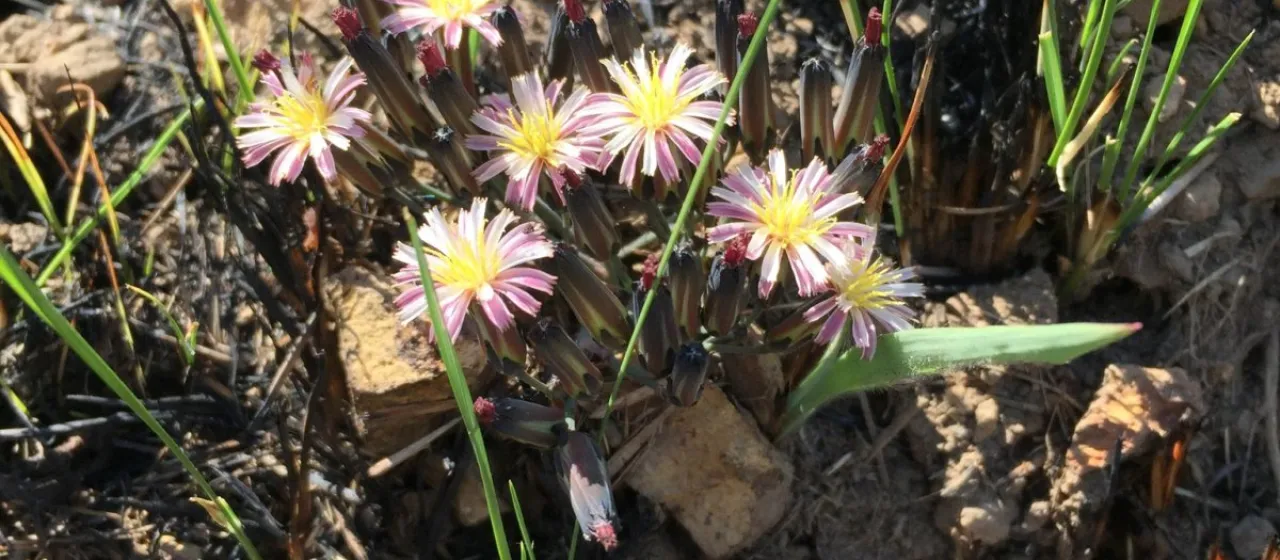
Botanically, the plant presents a low-growing rosette of leaves designed to reduce transpiration, complemented by a deep taproot system that reaches deeper soil layers to extract hidden moisture. The inflorescences are typical of the Asteraceae family, featuring bright yellow flowers that bloom during the active growth season.
Agronomic requirements are focused on sandy or well-drained soils, as the plant is highly susceptible to root rot if waterlogging occurs. It performs best under minimal cultivation, requiring little to no artificial fertilization, which makes it an economically viable option for developing sustainable farming systems in drylands.
The primary use of Launaea nana is in soil restoration and pasture management. It serves as a valuable forage plant for livestock such as camels and small ruminants in arid zones, and its deep root structure helps prevent wind erosion in sandy areas, making it a critical component for ecological stabilization.
- Requires well-drained, sandy soils.
- Highly drought-resistant morphology.
- Limited pest susceptibility (aphids, powdery mildew).
- Suitable for soil erosion control.
Regarding health, the plant is relatively robust, though growers should be vigilant about powdery mildew if humidity levels spike unexpectedly. Proper spacing and avoiding over-irrigation are the most effective strategies to maintain a healthy stand and ensure high productivity in various agricultural settings.