
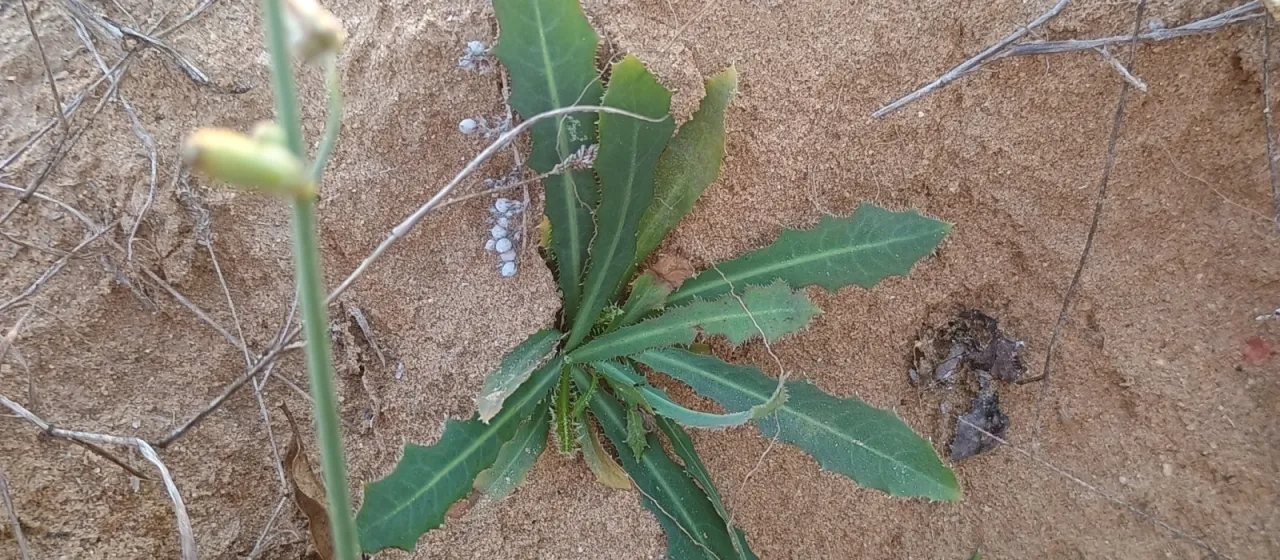
Description
Launaea procumbens is a perennial herbaceous plant belonging to the Asteraceae family. In agricultural contexts, it is recognized as a resilient species that occupies an important niche in arid and semi-arid ecosystems, offering potential as both a source of livestock feed and a medicinal resource.
The plant originates from the warmer regions of Asia and North Africa, where it has successfully adapted to survive extreme heat and water scarcity. Its ability to thrive in harsh, semi-desert conditions makes it a valuable candidate for inclusion in agricultural programs targeting sustainable development on marginal lands where water is a limiting factor.
Botanically, it is characterized by a sprawling growth habit with finely dissected leaves, which helps in minimizing transpiration. The root system is deep and expansive, providing stability and access to deep-seated soil moisture. The yellow flower heads are characteristic of the Cichorieae tribe, ensuring effective reproduction through insect pollination.
Regarding cultivation, this species prefers well-drained sandy or loamy soils with a neutral pH. It is notably tolerant of low-nutrient soil profiles, requiring little in terms of supplemental fertilization. Minimal tillage and occasional irrigation during the establishment phase are the primary agricultural requirements for achieving a high biomass yield.
The economic utility of the plant is centered on its role as high-quality forage for grazing livestock due to its high nutritional value. Furthermore, it contains various bioactive compounds, leading to its extensive use in traditional medicinal practices. Research is ongoing regarding its efficacy in soil erosion control due to its extensive root structure.
- Excellent drought and heat tolerance.
- High nutritional profile for livestock.
- Medicinal properties for inflammation treatment.
- Valuable for stabilizing sandy soils.