
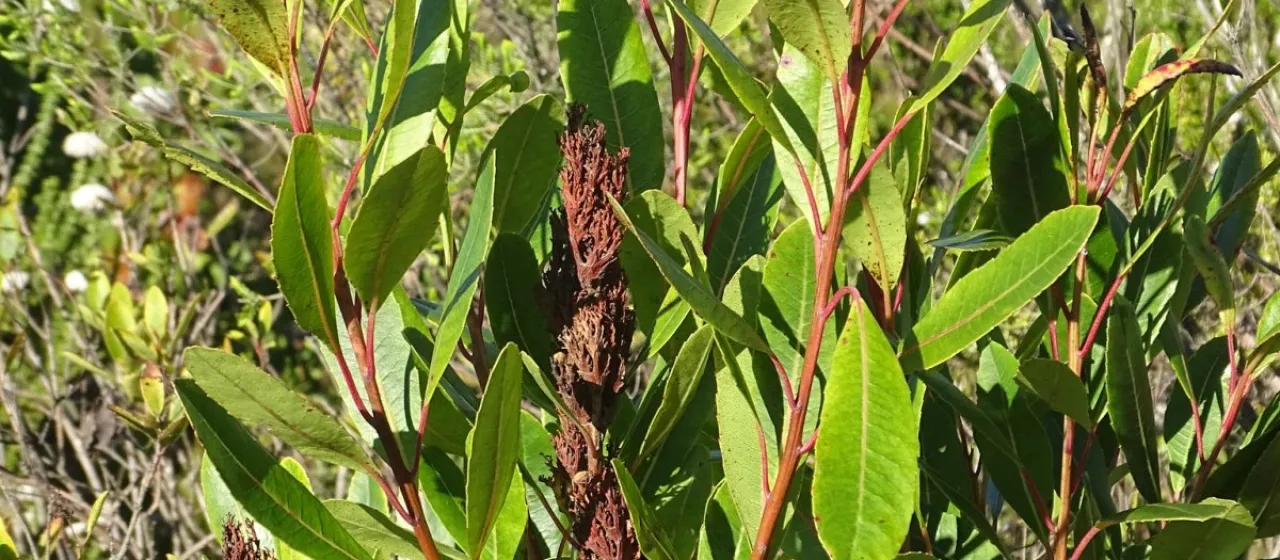
Description
Laurophyllus capensis is a distinctive evergreen plant belonging to the Anacardiaceae family. It serves as an interesting specimen within the family, which also includes economically significant crops like cashews and pistachios, although its primary value lies in its unique ecological role and botanical traits.
The species is endemic to the Cape Floristic Region of South Africa. It has adapted to the region's Mediterranean-type climate, characterized by dry, hot summers and cool, wet winters. The natural distribution is largely determined by the specific topography of mountain slopes and fynbos habitats.
Botanically, it is a robust shrub with thick, leathery leaves designed to withstand high solar radiation and periodic water stress. The plant exhibits slow growth patterns and maintains a dense foliage structure, which is a key trait for maintaining structural integrity in windy coastal or mountainous environments.
Cultivation requires well-drained, sandy or loamy soils with low fertility, mimicking its native habitat. It thrives under full sunlight and is intolerant of waterlogging, which often leads to root collar rot. Minimal fertilization is required, as the plant is adapted to nutrient-poor soils characteristic of its home range.
In terms of agricultural and landscape use, it is prized as a xeriscaping candidate due to its exceptional drought tolerance. While not a commercial crop in the traditional food sense, it is of interest in sustainable horticulture. Typical pests include sap-sucking insects during moist spells, but it is generally resilient against common agricultural pathogens.