
Description
Trapper's tea (Ledum glandulosum) is a perennial evergreen shrub belonging to the Ericaceae family. Known for its distinct gland-dotted leaves, this species is a member of the Labrador tea group. It typically grows as a small to medium-sized shrub, often forming dense colonies in its natural mountain habitats.
Native to Western North America, the plant’s range extends from the subalpine zones of Alaska down to the Sierra Nevada in California. It thrives in high-elevation areas, specifically in moist meadows, near stream banks, and in open forested sites. These environments are characterized by cool temperatures, high soil acidity, and consistent water availability throughout the growing season.
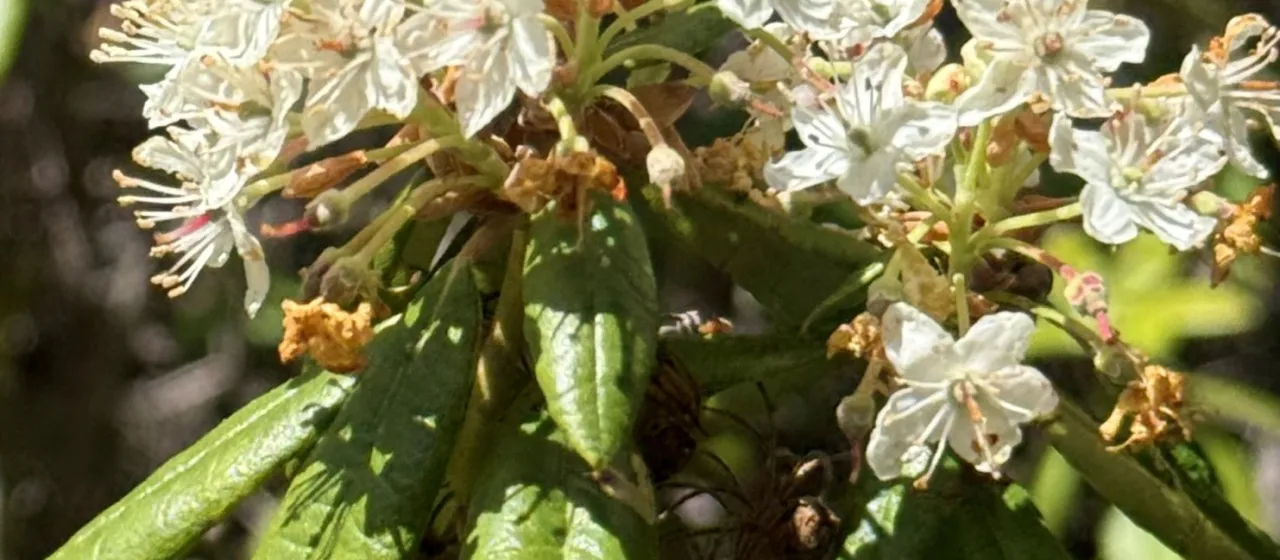
Botanically, the plant is recognized by its lanceolate to elliptic, leathery leaves which possess small, resinous glands on the underside. These glands secrete essential oils that provide a pungent, distinct aroma. During the blooming season, the shrub produces clusters of white, five-petaled flowers, which are highly attractive to native pollinators such as bumblebees.
Cultivation requirements for this species are specific and demanding. It requires highly acidic, peat-based soil with excellent drainage to prevent root rot. Supplemental watering is necessary in climates with dry summers, and the soil should always be kept moist but not waterlogged. Application of sulfur or ericaceous fertilizers is essential to maintain the necessary pH levels for nutrient uptake.
Economic and practical uses of Trapper's tea include:
- Utilization in horticultural collections of acid-loving, temperate-climate plants.
- Ethnobotanical research into the traditional uses of Ledum species.
- Conservation landscaping to support biodiversity in high-altitude environments.
In terms of pests and diseases, this plant is relatively hardy but can be affected by root pathogens like Phytophthora if drainage is poor. Foliar fungi, such as leaf spot, may occur in conditions with limited air circulation. Proper spacing and the avoidance of overhead irrigation are the most effective strategies to keep the shrub healthy and disease-free in a cultivated garden setting.