
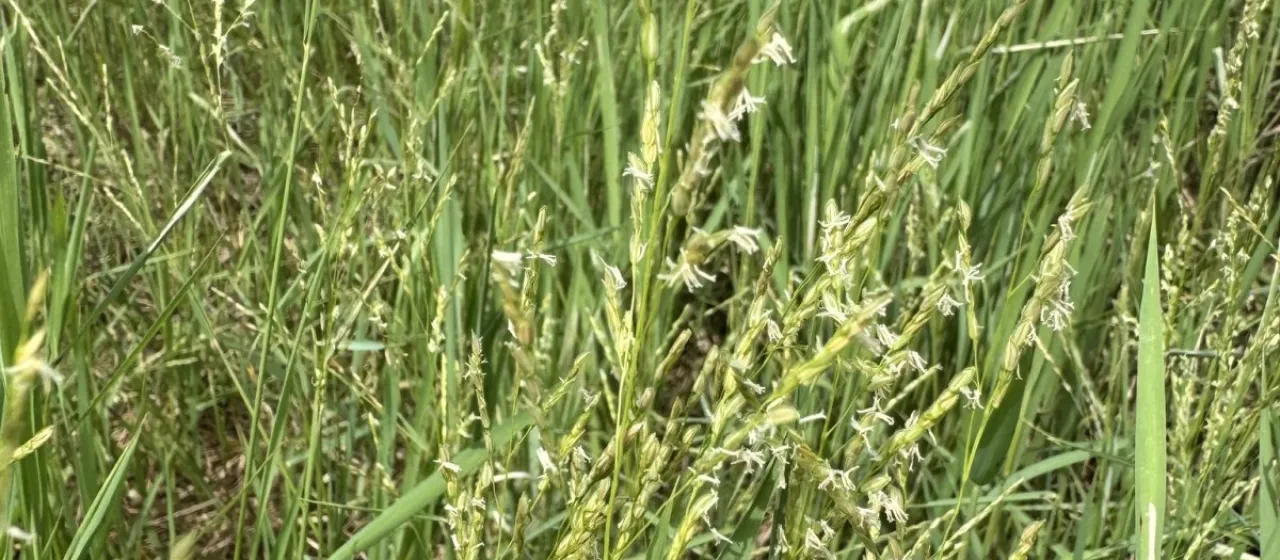
Description
Southern cutgrass (Leersia hexandra) is a perennial grass species belonging to the Poaceae family. Known for its remarkable adaptation to wetland environments, it serves as a critical agricultural resource in tropical and subtropical regions where traditional forage grasses often fail due to waterlogging.
This species is widely distributed across the globe, inhabiting swampy areas, riverbanks, and marshlands. Its natural habitat includes both Americas, Africa, and parts of Asia. Due to its ecological plasticity, it thrives in environments characterized by stagnant or slow-moving water, making it a dominant flora component in these specific aquatic ecosystems.
Botanically, the plant features a spreading rhizomatous growth pattern with stems that can grow up to one meter high. The leaves are distinctively scabrous, featuring tiny serrated margins that feel rough to the touch. The inflorescence is a panicle with narrow spikelets, each containing six stamens, which is a diagnostic characteristic of this specific botanical taxon.
Successful cultivation requires consistent moisture and warm climatic conditions. It is highly intolerant to drought, preferring silty or clay-rich wetland soils. In agronomic practice, managing this crop involves controlling water levels to encourage vegetative spread and preventing total desiccation during the dry season, as the plant relies heavily on water availability for its metabolic processes.
The primary economic use of Southern cutgrass is as forage for livestock, particularly in grazing systems for buffalo and cattle. Despite the rough texture of the leaves, the grass is highly nutritious when young and provides essential biomass in challenging terrains. Additionally, it is increasingly valued for its role in bio-remediation, specifically in cleaning runoff water by absorbing excess nutrients from agricultural fertilizers.
- Exceptional tolerance to flooding and anaerobic soil conditions.
- Ability to thrive in poor, waterlogged agricultural zones.
- Rapid recovery and biomass production following grazing.
- Erosion control capacity along water bodies and irrigation channels.