
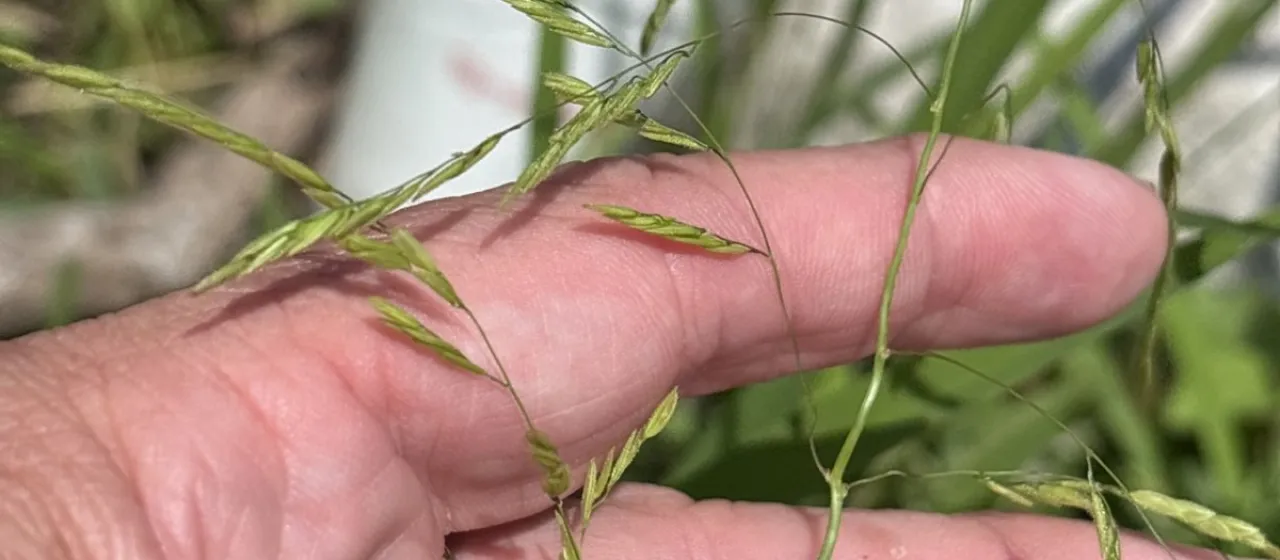
Description
Rice cutgrass (Latin: Leersia oryzoides) is a perennial grass species belonging to the family Poaceae. It is named for its superficial resemblance to cultivated rice and the characteristic serrated, sharp-edged leaves that can easily cut skin, which gives the plant its common English name. It is a true wetland plant, typically thriving in saturated environments.
Botanically, the plant is characterized by its rhizomatous growth habit, which allows it to form dense, spreading colonies. The stems are slender and can reach heights of up to 1.5 meters. The leaves are flat, grayish-green, and famously rough to the touch due to tiny, stiff hairs (silica teeth) along the margins. The inflorescence is a loose, open panicle that emerges from the uppermost leaf sheath during the summer months.
The native range of Leersia oryzoides is extensive, covering much of the temperate Northern Hemisphere, including North America, Europe, and parts of Asia. It is strictly tied to aquatic and semi-aquatic habitats such as stream banks, marshes, ditches, and the edges of ponds. It prefers fertile, silty soils that remain moist throughout the growing season.
From an agricultural standpoint, rice cutgrass is often considered a troublesome weed in rice paddies because it mimics the crop and competes for resources. However, it serves a beneficial ecological role in natural systems, providing essential cover for waterfowl and stabilizing shorelines against erosion. In some contexts, it is studied for its ability to absorb excess nutrients from agricultural runoff.
- Adaptation to saturated and flooded soil conditions.
- Aggressive spread via underground creeping rhizomes.
- High silica content in leaf blades causing physical irritation.
- Important nesting habitat for various wetland bird species.
Pests and diseases affecting rice cutgrass are similar to those that impact other wild and cultivated grasses, including various fungal rusts and leaf-spotting pathogens. Because it thrives in water, it can sometimes serve as an alternative host for pathogens that attack cereal crops. Management strategies involve drainage control, physical removal, and the specific application of aquatic-approved herbicides where necessary.