
Description
Legousia falcata is an annual herbaceous plant belonging to the Campanulaceae family. Primarily known as a wild species often found in agricultural settings, it serves as a representative of the diverse Mediterranean flora, showcasing evolutionary adaptations to disturbed soil environments and seasonal climatic shifts.
The native range of this species covers the Mediterranean Basin, spanning Southern Europe, Northern Africa, and Western Asia. It thrives in open, sunny locations such as fallow fields, road edges, and meadows. Due to its opportunistic nature, it is frequently found in arable lands, where it competes with crops for sunlight and soil nutrients.
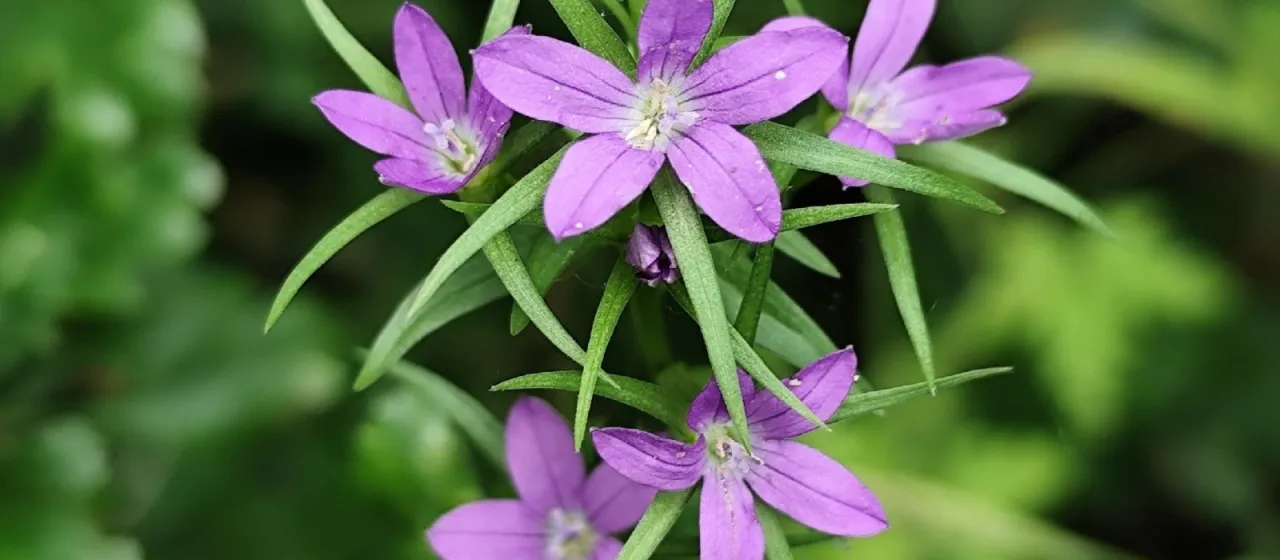
Botanically, the plant is characterized by a slender, branched stem that typically reaches a height of 10 to 40 centimeters. The leaves are generally lanceolate, with margins that may be entire or slightly serrated. The flowers are the most distinctive feature, presenting a bell-like shape with violet or bluish petals that open specifically in response to sufficient daylight conditions.
Regarding soil and climate requirements, Legousia falcata prefers well-drained, calcareous soils and requires high solar exposure to complete its life cycle. It is remarkably drought-tolerant, which allows it to thrive in the dry Mediterranean summers. However, it does not perform well in waterlogged conditions, which can lead to root decay and overall plant suppression.
In terms of plant health, it is susceptible to common diseases found in the Campanulaceae family, particularly powdery mildew in humid, stagnant air conditions. Common pests include aphids, which often cluster on the stems and developing flower buds. Effective management in an agricultural context typically involves mechanical weeding or proper crop rotation to minimize its presence in fields.
- Family: Campanulaceae
- Habit: Annual herb
- Flower Color: Violet/Blue
- Habitat: Fallow land and open fields