
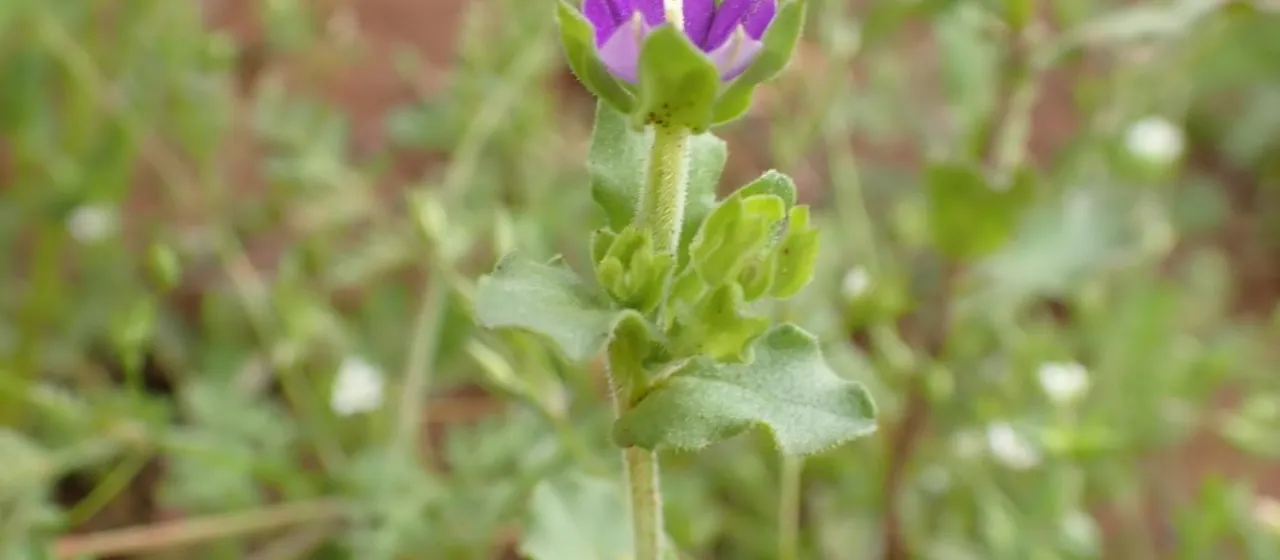
Description
Venus's looking-glass (Legousia hybrida) is an annual herbaceous plant belonging to the Campanulaceae family. While often categorized as a field weed in agricultural settings, specifically in winter cereal crops, it serves as a significant subject for ecological monitoring within farmland ecosystems.
The species is native to the Mediterranean region and parts of Western and Central Europe. Its distribution area has expanded over time due to human agricultural activities. It typically thrives in disturbed areas such as arable fields, rocky slopes, and roadsides, showing a preference for calcareous soil conditions that provide optimal mineral support for its growth.
Botanically, the plant is characterized by a height ranging from 10 to 40 cm with erect or branched stems. Its leaves are generally oblong to ovate with wavy margins. The flowers are small and distinct, exhibiting cleistogamy. This biological adaptation allows the plant to self-pollinate within closed buds, ensuring successful seed production even in unfavorable weather conditions where insect pollination would be restricted.
Regarding cultivation requirements, Legousia hybrida prefers sunny locations and well-drained, lime-rich soils. It is relatively drought-tolerant but performs poorly in waterlogged or heavily acidic substrates. In an agricultural context, its growth cycle is synchronized with the winter cereals it often infiltrates, making it a competitor for light and early-season nutrients.
Management of this plant involves integrated pest management strategies. Mechanical weeding and the use of broad-spectrum herbicides are the primary methods for control in commercial fields. Common diseases include powdery mildew during humid conditions, while insect pests primarily include generalist phytophagous insects that rarely cause significant economic damage compared to more aggressive invasive weed species.
- Family: Campanulaceae
- Life cycle: Annual
- Reproductive strategy: Cleistogamy
- Preferred soil: Calcareous/Well-drained