
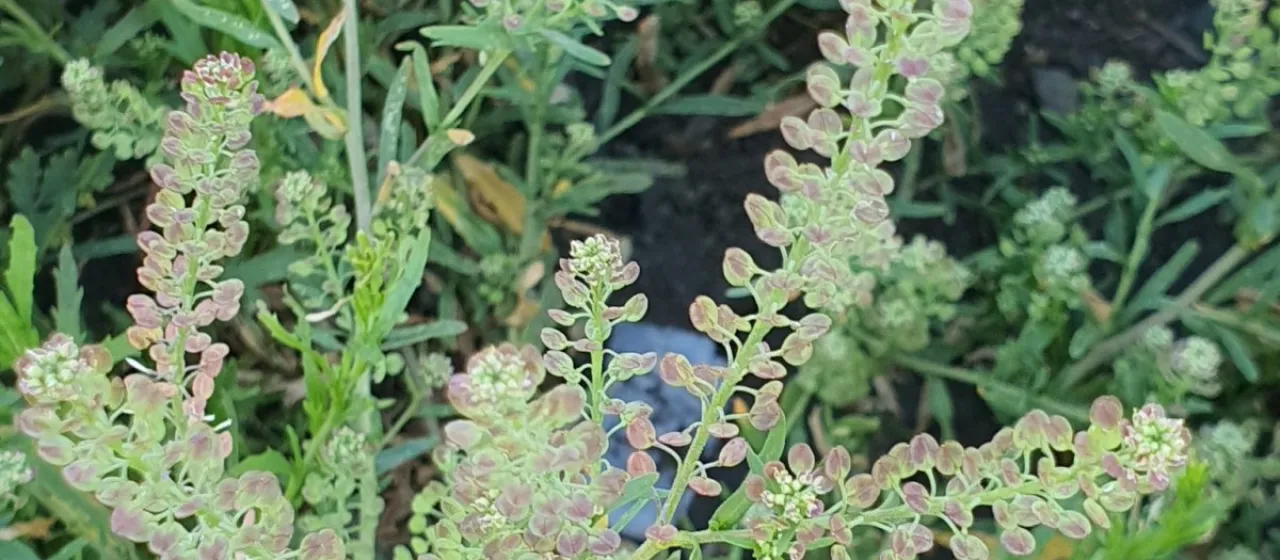
Description
Peppergrass (Latin: Lepidium apetalum) is an annual or biennial herb belonging to the Brassicaceae family. While frequently categorized as a weed in conventional agriculture, this plant possesses significant biological characteristics that make it valuable for both pharmacological research and traditional medicinal practices.
The species originates from East Asia, encompassing regions such as China, Mongolia, and the Russian Far East. Currently, its distribution area is vast, covering temperate climates across Eurasia and parts of North America. It is highly adaptable, often found in ruderal areas, along roadsides, and on abandoned fields, thriving in environments where other crops might struggle.
Botanically, the plant features an erect, often branched stem that reaches heights of 10 to 40 cm. The leaves are typically linear-lanceolate, while the flowers are distinctively apetalous (lacking petals) and organized in dense terminal racemes. As the plant matures, these racemes lengthen significantly, developing small, oval-shaped seed pods that contribute to its high dispersal capability.
Regarding cultivation, Lepidium apetalum is remarkably undemanding. It can grow in a variety of soil types, including saline and nutrient-poor substrates. It requires full sun exposure and is highly tolerant of drought conditions, making it a robust species. However, consistent soil moisture during the early vegetative stage is beneficial to ensure healthy stand development and higher seed yields.
The primary economic use of the plant lies in its medicinal properties, with seeds frequently utilized for their diuretic, expectorant, and anti-inflammatory qualities. Agronomists managing this crop must watch for common pests and diseases, such as:
- Crucifer flea beetles;
- Downy mildew;
- Clubroot fungus, which is prevalent in many brassica family members.