
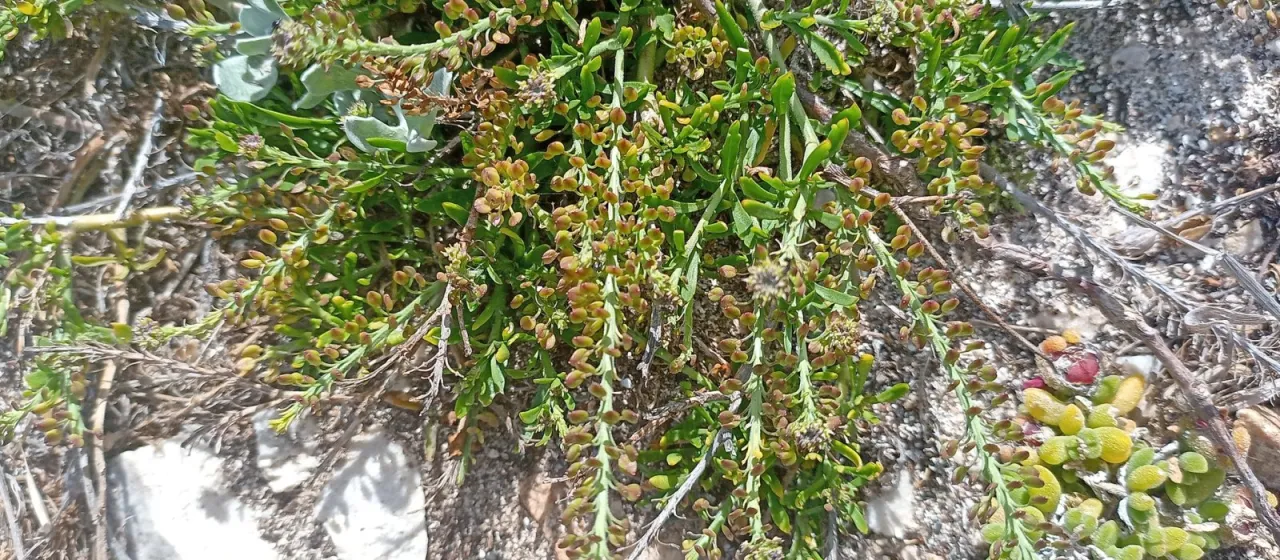
Description
Cape cress (Lepidium capense) is a herbaceous plant belonging to the Brassicaceae family. It is recognized for its hardiness and its ability to thrive in specific environmental conditions that would be challenging for more sensitive culinary greens. This species is gaining interest as a specialty crop in various agricultural sectors.
The plant originates from the southern regions of Africa, where it has historically adapted to arid and semi-arid climates. In an agricultural context, its cultivation requires attention to the specific provenance of the variety, as it excels in dry, sun-drenched environments where other leafy greens might fail due to lack of moisture or extreme heat.
Botanically, Lepidium capense is characterized by its rosette of basal leaves and its tendency to develop robust stalks during the reproductive phase. The plant features the distinctive white, small flowers common to the mustard family, followed by silicles containing seeds. Its physiological structure is optimized for efficient water use and survival in nutrient-poor substrates.
Cultivation practices require well-draining soil and exposure to full sunlight to maximize growth potential. It is crucial to prevent waterlogging, as the plant is susceptible to root rot if moisture levels are too high. Regular spacing is essential to ensure adequate air circulation, which helps manage micro-climatic conditions around the plant foliage.
The primary management concerns for the successful production of this crop include the following factors:
- Managing flea beetle infestations during the seedling stage.
- Preventing clubroot disease by maintaining proper soil pH.
- Monitoring for aphid populations that tend to cluster on soft leaf tissue.
- Controlling competition from weeds to preserve soil resources.