
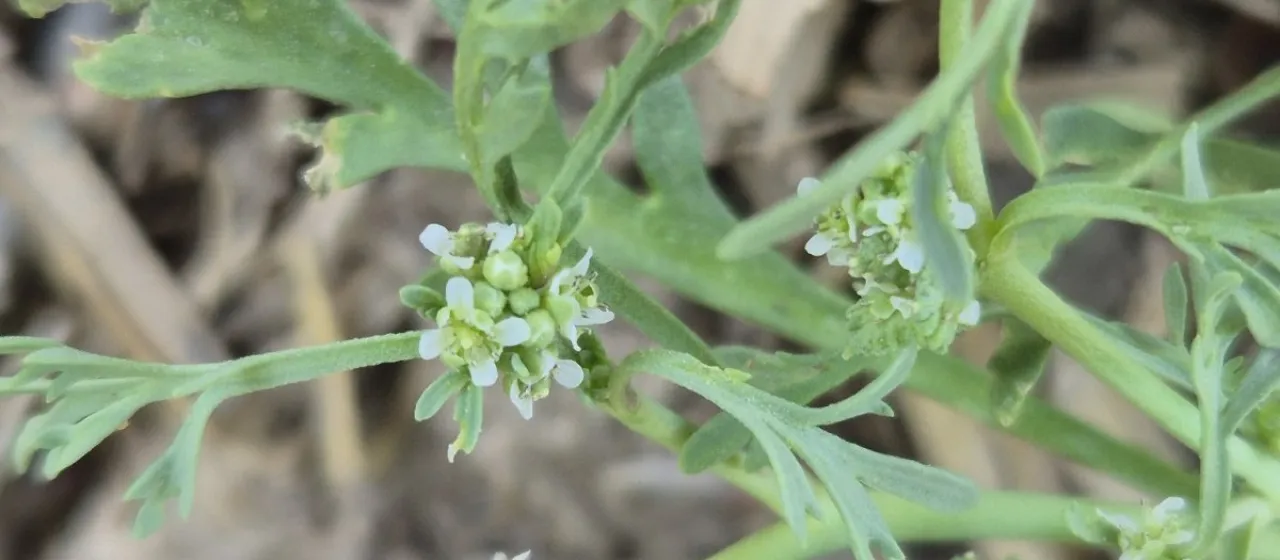
Description
Wartcress, scientifically classified as Lepidium coronopus (syn. Coronopus squamatus), is a prostrate herbaceous plant belonging to the Brassicaceae family. While it is often classified as a weed in agricultural landscapes, it exhibits fascinating adaptive traits that allow it to thrive in compacted and disturbed soils where other plant species struggle to establish.
Originating from the Mediterranean region and parts of Europe, the plant has successfully naturalized across temperate zones globally. It is commonly found in pastures, along roadsides, and in cultivated fields. Its ability to tolerate frequent trampling and soil compaction makes it a resilient inhabitant of diverse environments.
Botanically, Lepidium coronopus is characterized by its sprawling stems that form dense rosettes. Its leaves are pinnately lobed, and it produces clusters of tiny, greenish-white flowers. The most distinctive feature is the fruit—a silicle that is prominently wrinkled or crested, which explains the common name "wartcress" and its historical taxonomic naming.
The plant thrives in a variety of soil types, preferring sunny locations with moderate moisture. From an agrotechnical perspective, controlling this weed requires effective seedbed preparation and the use of targeted herbicides. Due to its long-lived seed bank, integrated pest management strategies focusing on early detection and physical removal are essential to preventing its spread in commercial crop fields.
Economically, while it lacks significant status as a commercial crop, it is occasionally recognized for its minor edible properties in specific cultural contexts. However, its primary agricultural relevance lies in its role as a host for pests that affect other Brassicaceae, such as flea beetles. Farmers must manage its presence to reduce the risk of secondary pest infestations in more sensitive brassica crops.