
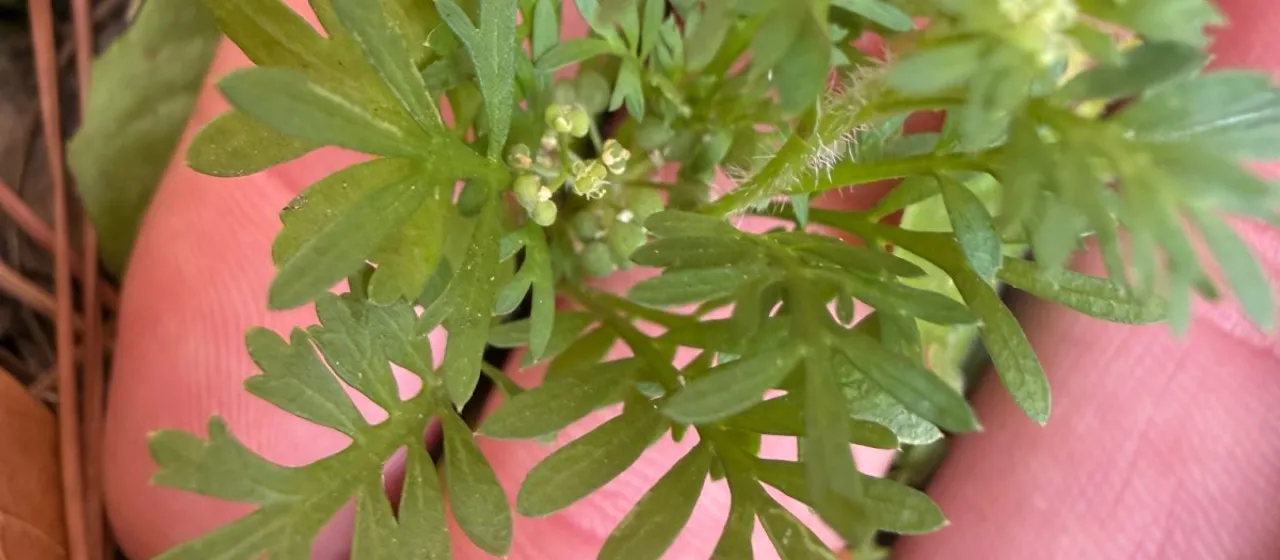
Description
Lesser swinecress (Lepidium didymum) is an annual or biennial herbaceous plant belonging to the Brassicaceae family. Native to South America, it has become a globally distributed species, frequently found in temperate and subtropical regions as a common weed of cultivated fields and disturbed areas.
The plant is characterized by its prostrate or spreading growth habit, typically forming a rosette of deeply pinnatifid leaves. The stems, which can extend up to 50 cm, bear small, inconspicuous greenish-white flowers clustered in the leaf axils. Its distinctive fruit is a notched, two-lobed silicle, which helps in easy identification of the species in the field.
Ecologically, Lepidium didymum thrives in nitrogen-rich soils and is often associated with high-moisture environments. It is a highly opportunistic plant, frequently colonizing gardens, lawns, roadsides, and agricultural pastures. It is capable of germinating under a wide range of temperatures, which contributes to its successful establishment in diverse climates.
From an agricultural standpoint, lesser swinecress is often classified as a nuisance. When it infests pasture lands, it can be problematic for dairy farming; if ingested by livestock, it imparts an undesirable flavor and odor to milk and dairy products due to the sulfur-containing compounds present in the foliage. It also competes with vegetable crops for nutrients and space.
- Strong survival strategy due to prolific seed production.
- Tolerance to heavy trampling in pastures.
- Resistance to basic mowing regimes due to low-growing morphology.
- Chemical content that negatively affects animal product quality.
Management of this species requires a multi-faceted approach. Cultural control methods include intensive crop rotation and hand-weeding before seed set. In commercial agricultural systems, post-emergence herbicides are typically employed to manage infestations. Ensuring proper soil drainage and maintaining competitive crop cover can also significantly suppress the spread of this plant.