
Description
Grass-leaved pepperwort (lat. Lepidium graminifolium) is a perennial herbaceous plant belonging to the Brassicaceae family. In an agricultural context, it is primarily identified as a weed, although it possesses significant botanical characteristics typical of the Lepidium genus, known for its rapid colonization strategies and biochemical adaptability.
The plant originates from Southern and Central Europe, extending into Mediterranean habitats. It is highly successful in occupying disturbed landscapes, such as roadsides, rocky terrain, and fallow fields. Its historical distribution reflects an evolutionary adaptation to dry, sun-exposed environments where moisture availability can be highly variable throughout the growing season.
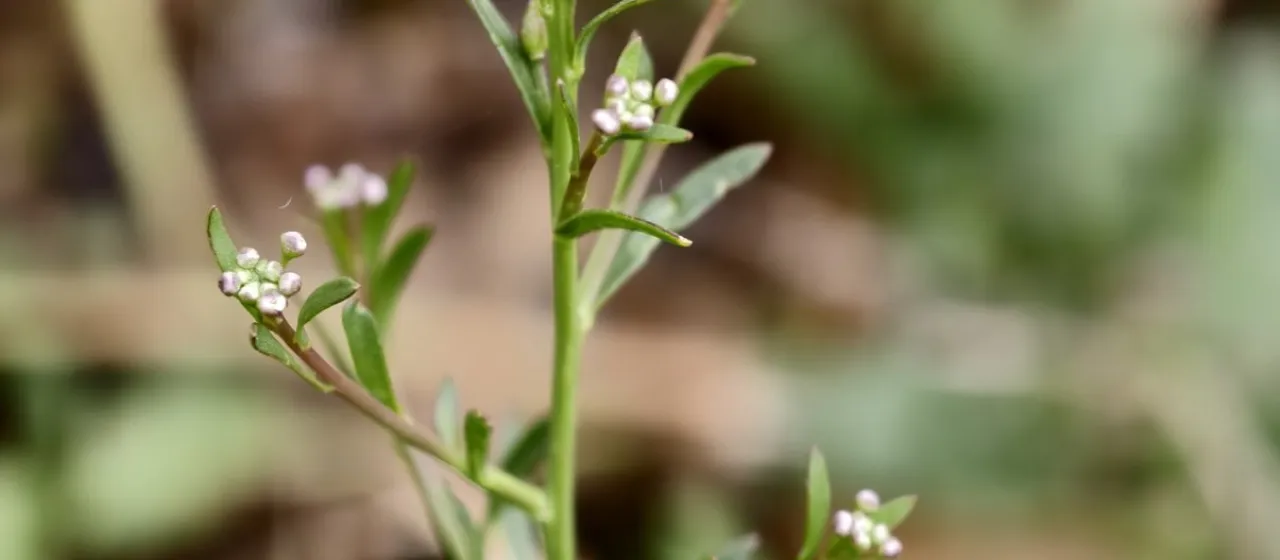
Botanically, this species is defined by its narrow, lanceolate leaves which give it a grass-like appearance, differentiating it from many other broad-leaved Brassicaceae. It develops a vigorous, branching root system that allows it to survive in depleted soils. The inflorescence consists of dense racemes bearing small, numerous flowers that mature into seed pods, facilitating efficient reproduction.
Regarding growth requirements, grass-leaved pepperwort thrives in full sunlight and prefers well-drained, nutrient-poor, or sandy substrates. It is exceptionally resilient to drought and can withstand periods of low rainfall that might inhibit standard crop growth. In farming, its presence is often managed through mechanical cultivation or specific herbicides to prevent its spread into fields of sensitive vegetables or oilseed crops.
- Strong vegetative propagation through extensive rhizomes.
- High tolerance to alkaline and stony soil conditions.
- Resistance to pests common in the mustard family.
- Effective seed dispersal mechanisms for population expansion.
While not a traditional cash crop, the species is occasionally researched for its potential roles in traditional medicine or as a model organism for stress-resistant plant studies. In agricultural settings, the main focus remains on managing its competitive impact. Because it belongs to the Brassicaceae family, it can act as an alternative host for pathogens and pests such as flea beetles, necessitating careful monitoring in crop rotation planning.