
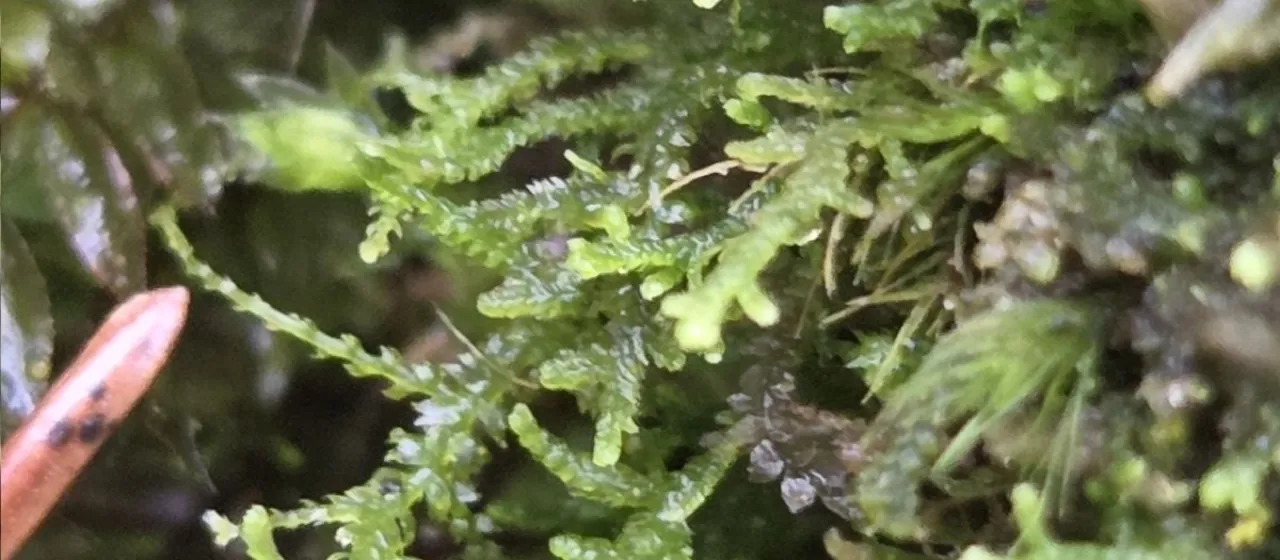
Description
Lepidozia reptans is a distinctive species of liverwort belonging to the family Lepidoziaceae. Often classified as a creeping liverwort, it serves as a vital biological indicator in forest ecosystems, contributing to the moisture retention and structural complexity of the forest floor's microhabitat.
The origin and natural distribution of this moss cover the temperate regions of the Northern Hemisphere, including Europe, North America, and parts of Asia. It thrives primarily in coniferous and mixed woodlands, typically colonizing rotting logs, moist stumps, and acidic organic soils where humidity levels remain consistently high.
Botanically, the species is defined by its prostrate, branching stems and characteristic deeply dissected leaves that form dense, mat-like patches. These mats are usually vibrant green, although they may shift in hue depending on the intensity of the ambient light, showcasing the plant's ability to adapt to varying shaded environments.
Regarding cultivation requirements, Lepidozia reptans demands high atmospheric humidity and protection from direct sunlight, which causes dehydration. In specialized setups like terrariums, it requires well-drained acidic substrates and pure, mineral-free water to maintain its delicate physiological structure and lush appearance.
While not a traditional agricultural crop, its ecological utility is significant, as it aids in humus formation and soil stabilization. It is generally resistant to standard plant pests; however, it is highly sensitive to chemical fertilizers and heavy metal accumulation, making it a reliable indicator of healthy, non-polluted forest environments.