
Description
Leptinella potentillina is a perennial herbaceous plant belonging to the Asteraceae family. It is widely recognized in ornamental horticulture for its dense, mat-forming habit, which makes it an excellent choice for ground-level carpeting in gardens that mimic natural rocky or alpine environments.
Originating from the sub-Antarctic islands, specifically regions near New Zealand, the plant is naturally adapted to cool, temperate climates and windy conditions. This geographical background defines its resilience and its specific requirements for soil moisture and light exposure in a cultivated environment.
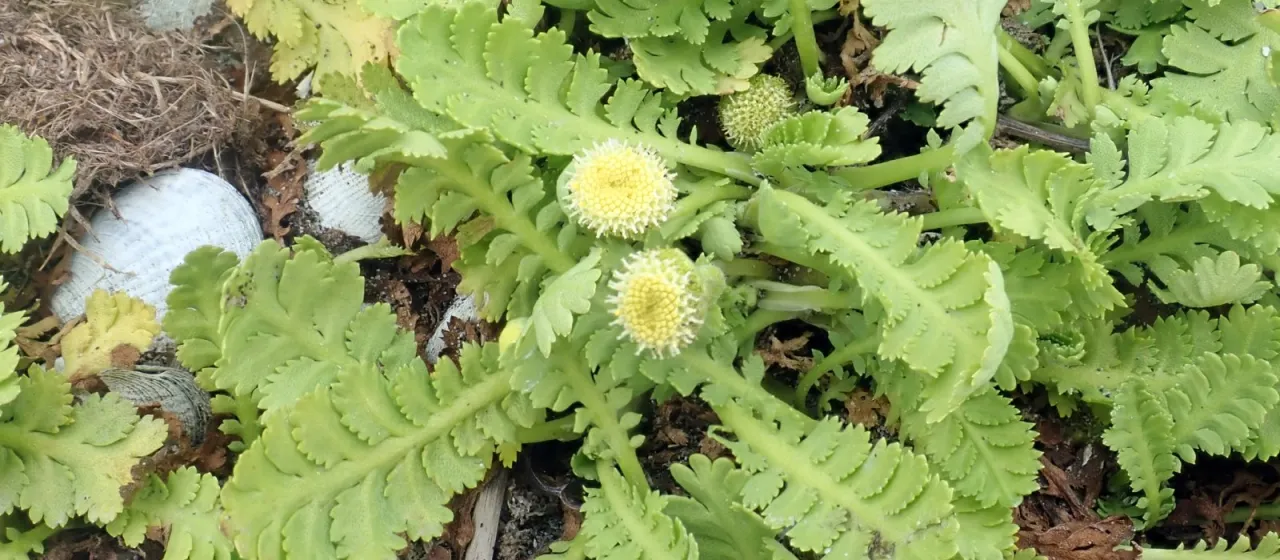
Botanically, the plant is characterized by creeping stems and finely pinnate foliage that resembles the leaves of Potentilla, hence its species name. It spreads horizontally, creating a textured carpet. The flowers are small, button-like capitula that are generally inconspicuous, focusing the plant's decorative value on its lush, deep-green, or glaucous foliage.
Regarding its cultivation, Leptinella potentillina thrives in well-drained, moist, and slightly acidic to neutral soils. While it tolerates partial shade, it performs best in locations with filtered sunlight. Proper site preparation, including the incorporation of grit or sand for drainage, is essential to prevent root rot, which is the most common issue associated with this species.
The main uses of this crop include:
- ground cover for rock gardens;
- planting in gaps between flagstones or pavers;
- erosion control on small slopes.