
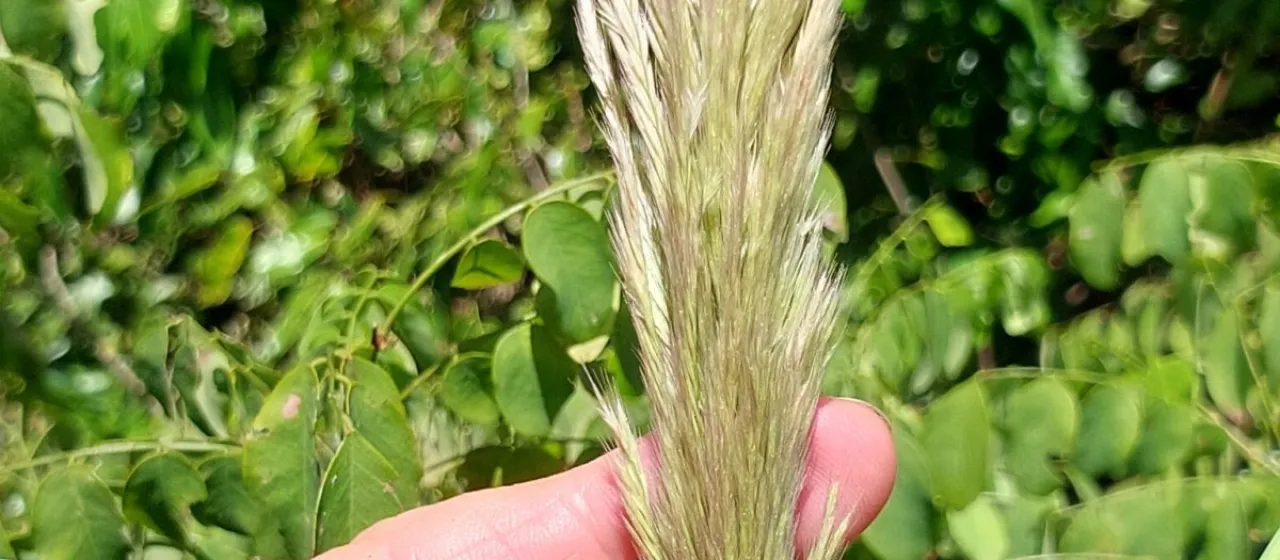
Description
Leptocarydion vulpiastrum is a perennial grass species belonging to the Poaceae family. This species is native to tropical and subtropical Africa and is recognized for its ability to thrive in harsh, arid, and semi-arid environments where other forage crops struggle to establish.
The plant originates from the grasslands and savannas of the African continent. Its distribution spans regions characterized by distinct dry seasons and high heat, reflecting its evolution as a resilient grass species capable of surviving significant periods of water stress and nutrient-poor soil conditions.
Botanically, it is distinguished by its inflorescence, which is a dense, spicate panicle resembling a fox-tail. The plant forms tufted, erect culms with narrow, leaf-blades. Its root system is fibrous and deep-reaching, which provides excellent soil anchoring and helps the plant maintain metabolic functions during prolonged drought.
Regarding cultivation requirements, Leptocarydion vulpiastrum prefers well-drained, sandy, or light-textured soils with exposure to full sunlight. It exhibits low tolerance for waterlogged conditions, making proper soil drainage a critical factor. Agrotechnical management should focus on preserving natural ground cover to prevent erosion and encourage seed dispersal.
In terms of agricultural utility, it serves as a valuable forage plant for grazing livestock. It provides essential biomass in arid rangelands. Common pests include grasshoppers and stem-boring insects, while diseases are typically limited to fungal rusts or blights, which generally occur only under conditions of excessive humidity or poor air circulation.