
Description
Mucronate sprangletop (Leptochloa mucronata), also identified as red sprangletop, is an annual grass species belonging to the Poaceae family. While it is often managed as a weed in row-crop agricultural systems, its biological traits make it a significant subject of study in weed science and grassland management.
Native to the Americas, this species has successfully naturalized across diverse tropical and temperate environments globally. Its spread is frequently attributed to its ability to colonize disturbed soils, such as fallow agricultural fields, roadside embankments, and areas prone to water runoff during the growing season.
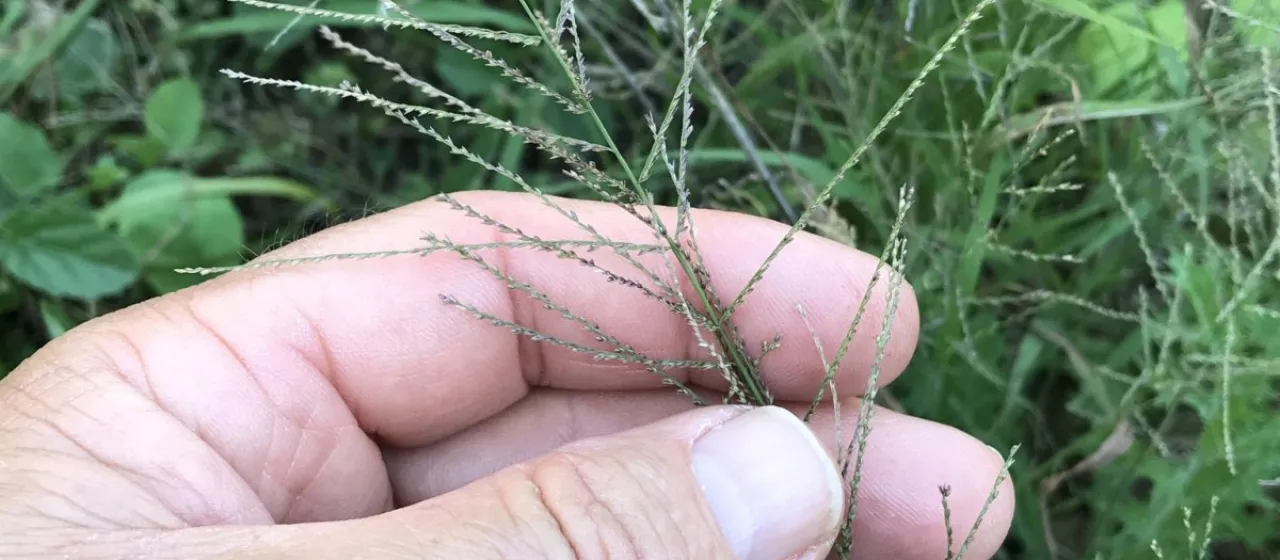
Botanically, Leptochloa mucronata features a slender, erect growth habit, with heights typically ranging from 30 to 90 cm. The leaves are flat and smooth, while the inflorescence is characterized by a series of narrow, spike-like branches. This unique arrangement of spikelets gives the plant its distinct appearance during the reproductive phase.
The plant thrives in warm climates, requiring ample sunlight for germination and rapid vegetative growth. It prefers fertile, loamy soils with adequate moisture levels, although it is remarkably tolerant to temporary flooding and soil compaction. Optimal development is observed during the hot summer months, reflecting its C4 photosynthetic pathway.
In terms of agricultural management, controlling this grass involves a combination of pre-emergence herbicides and mechanical cultivation. If treated as a forage resource, management should focus on harvesting biomass before seed head development to maintain nutrient quality and prevent the spread of viable seeds across the field.
- Rapid growth cycle synchronized with peak summer heat.
- High reproductive output via prolific seed production.
- Adaptability to various soil textures and moisture regimes.