
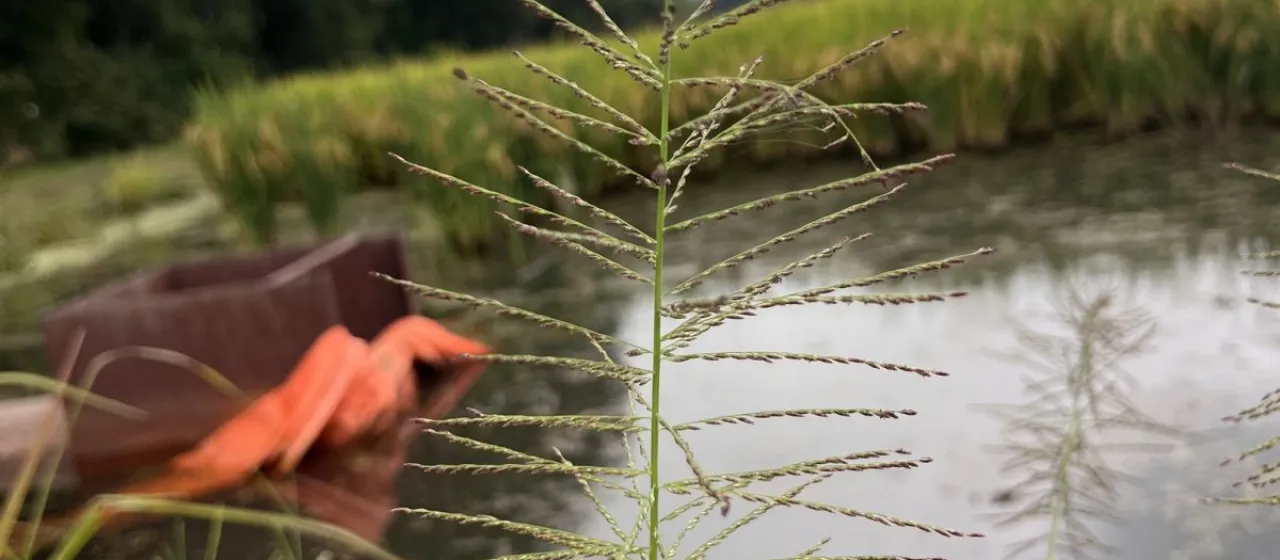
Description
Leptochloa panicoides is an annual herbaceous plant belonging to the grass family (Poaceae). Within the agricultural sector, it is primarily recognized for its invasive nature in irrigated fields, particularly in rice cultivation, where its morphological similarity to young rice plants often complicates manual weeding processes.
The species originates from the tropical and subtropical regions of the Americas. Its current range has expanded significantly into areas where irrigation infrastructure is prevalent. It thrives in environments characterized by high ambient temperatures and consistent water availability, often colonizing irrigation canals, drainage ditches, and waterlogged field borders.
Botanically, Leptochloa panicoides is characterized by its tufted habit and culms that can reach a height of approximately one meter. The leaves are flat and lanceolate, often possessing a distinct texture. Its inflorescence is a panicle consisting of slender, raceme-like branches, which facilitates efficient wind pollination and subsequent seed dispersal across large cultivated areas.
Regarding agronomic requirements, the species is highly adapted to hydro-morphically modified environments. It requires significant solar radiation and moisture levels to complete its life cycle. It is not cold-hardy; thus, its growth is strictly limited to the frost-free season. In terms of soil, it prefers silt-heavy or clay-based substrates that retain water effectively, reflecting its ecological specialization.
The primary economic use of this plant is non-agricultural, as it often poses a significant threat to crop yields. Management strategies typically involve an integrated approach, including water management (draining fields at specific growth stages), mechanical control, and the application of post-emergence herbicides specifically tailored for grass control in broad-leaved or aquatic crop systems.
Main challenges in managing this species include:
- Rapid reproductive rate leading to soil seed bank accumulation.
- Tolerance to waterlogged conditions that inhibit other competing weeds.
- Morphological resilience to standard mechanical weeding methods.