
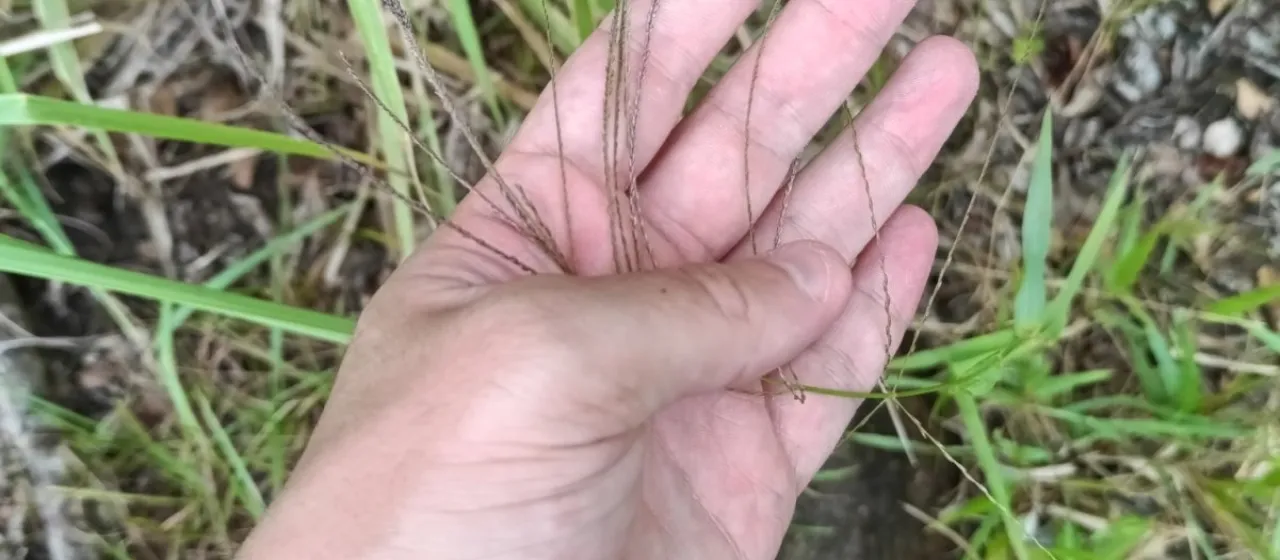
Description
Tropical sprangletop (Leptochloa virgata) is a perennial grass species belonging to the family Poaceae. This plant is well-known for its robust growth habit and is often encountered in agricultural landscapes within tropical and subtropical zones, where it serves as a source of biomass or, in some contexts, as a challenging invasive species.
The origin of this species is traced back to the tropical regions of the Americas. Over time, it has expanded its range significantly, becoming naturalized in many parts of the Caribbean, Central and South America, and various other warm regions globally. Its ability to colonize disturbed soil and marginal lands has made it a widespread grass in these territories.
Botanically, the plant is characterized by its tall, upright stems and narrow leaf blades. Its most distinct feature is the inflorescence, which consists of numerous slender, rod-like spikes that emerge from the main stem. These spikes are typically arranged in a panicle, giving the plant its scientific and common name variations related to its whip-like or wand-like appearance.
In terms of agricultural requirements, Leptochloa virgata thrives in sunny locations with well-drained but fertile soil. It is highly adaptable to moisture levels, though it responds vigorously to irrigation. Management practices typically involve controlled grazing or mowing to maintain the vegetation in a juvenile, high-protein state, preventing the stems from becoming too lignified.
The primary economic use is as forage for livestock. While it provides good ground cover, farmers must be aware of its potential to compete with other crops. Typical pests and diseases include:
- Rust fungi (Puccinia spp.)
- Powdery mildew
- Aphids during dry periods
- Leaf-eating beetles