
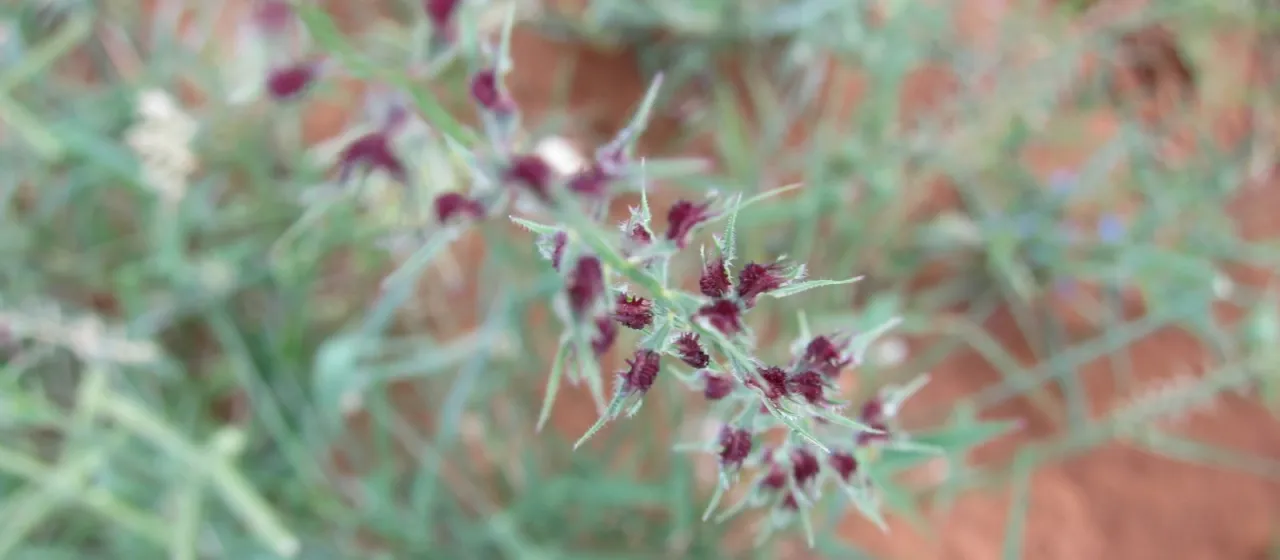
Description
Leptothrium senegalense is a perennial herbaceous plant belonging to the Poaceae family. This species is a classic example of flora adapted to arid and semi-arid environments, where it serves as a critical biological component in ecosystems that are generally hostile to most other agricultural crops.
The native range of this grass covers large parts of the African Sahel and extends into specific arid regions of Southern Asia. It is primarily found in desert-like savannas where it thrives under conditions of extreme heat and irregular precipitation, playing a key role in preventing soil erosion in sandy landscapes.
Botanically, it is recognized as a bunchgrass with narrow, sclerophyllous leaves and slender, spike-like inflorescences. Its root system is exceptionally robust, reaching deep into the soil profile to access moisture, which ensures the plant's survival during the most severe dry seasons when surface water is depleted.
Agricultural management is minimal, focusing on the preservation of natural rangelands. The crop does not require fertilizer or intensive soil preparation. It prefers sandy or loamy soils and is known for its tolerance to soil salinity, making it an essential species for maintaining biodiversity in marginal grazing lands.
The primary economic use of this plant is as forage for livestock, particularly goats, sheep, and camels that graze in semi-desert regions. While it is rarely cultivated as a commercial crop in the traditional sense, its biomass is vital for the survival of nomadic pastoralism. The species is highly resistant to common pests and diseases due to its hardy physiological structure.