
Description
Lepturus repens, commonly known as creeping lepturus, is a perennial grass species belonging to the Poaceae family. In agricultural and environmental sciences, it is highly valued for its exceptional ability to colonize coastal habitats and stabilize sandy soils, providing an essential ecological service in fragile maritime zones.
The plant originates from the tropical and subtropical regions of the Indian and Pacific Oceans. It is widely distributed across sandy coastal dunes and beaches throughout Africa, Asia, and Australia. Its presence is critical in these ecosystems as it prevents the migration of sand and protects inland areas from coastal erosion caused by wind and sea surges.
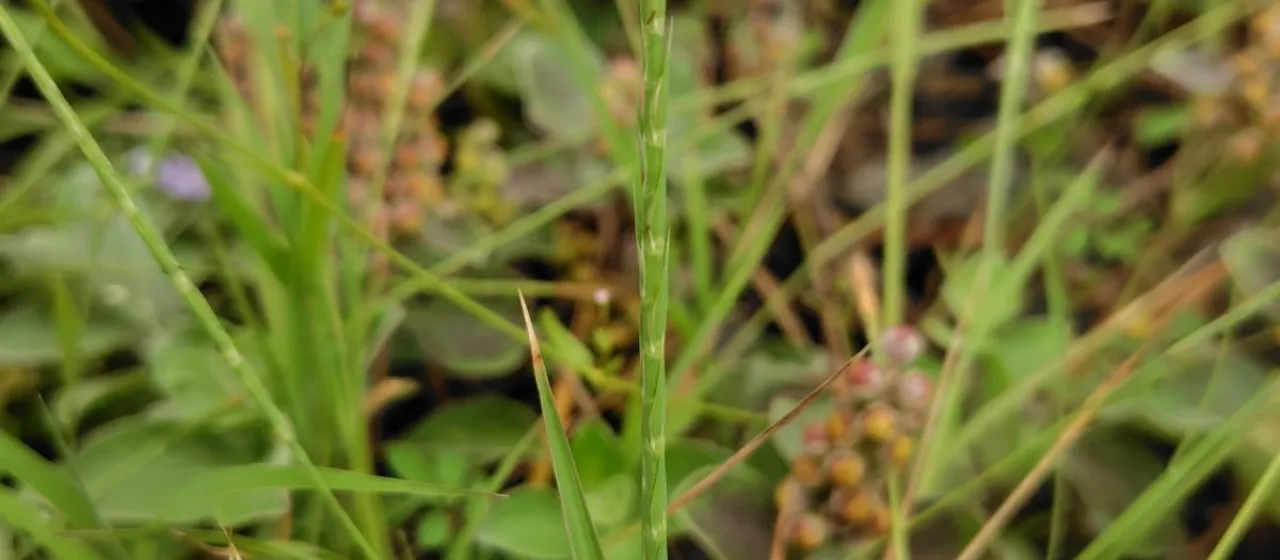
Botanically, the plant is characterized by its prostrate, creeping stems that root at the nodes, forming dense mats across the sand. The leaves are typically narrow, rigid, and well-adapted to high temperatures and salt exposure. Its inflorescence is a slender, cylindrical spike that breaks into segments at maturity, a mechanism that facilitates the dispersal of seeds by ocean currents and winds.
Regarding agrotechnical requirements, Lepturus repens thrives in well-drained, saline sandy soils. It is a heliophilous species, meaning it requires full sun exposure and cannot survive in shaded environments. Maintenance is minimal; the grass is remarkably drought-tolerant and requires no chemical fertilizers, as it has adapted to nutrient-poor coastal environments over millennia.
Economic and land-management uses of this grass are primarily focused on ecological restoration and soil conservation. While it may serve as secondary forage for livestock in extreme coastal environments, its primary role remains that of a sand-binder. It is virtually immune to most common crop diseases and pests, making it an excellent candidate for low-input sustainable land-management projects in tropical maritime regions.