
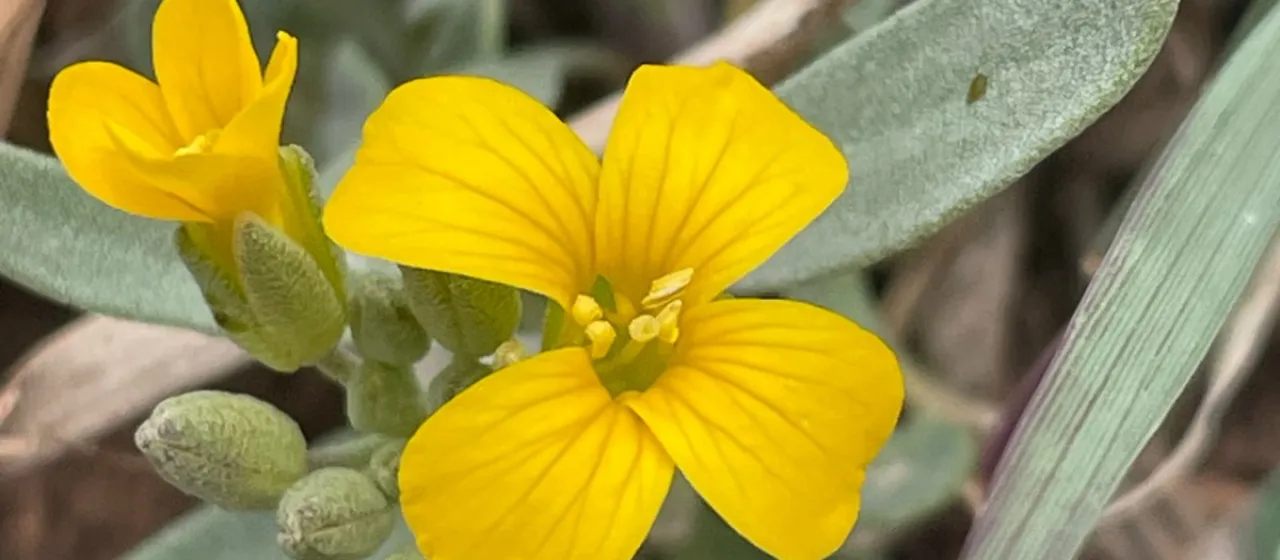
Description
Lesquerella fendleri is a promising industrial oilseed crop belonging to the Brassicaceae (mustard) family. This plant has gained significant scientific interest due to the composition of its seed oil, which is rich in unique hydroxy fatty acids, specifically lesquerolic acid, making it a valuable raw material for the chemical and lubricant industries.
The native habitat of this species is found in the arid and semi-arid regions of the southwestern United States and northern Mexico. Being a desert-adapted plant, it exhibits remarkable tolerance to high temperatures and low moisture availability. Agricultural research focuses on its potential as a sustainable alternative to traditional oilseeds in marginal, drought-prone environments.
Botanically, Lesquerella fendleri is characterized by a basal rosette of leaves and multiple upright racemes. The leaves are typically lanceolate and covered in fine, greyish hairs that aid in water retention. The fruit is a small, dehiscent silique containing numerous tiny seeds, which are the primary source of the high-viscosity, thermally stable industrial oil.
Agronomically, the crop requires well-drained, sandy or loamy soils with a neutral to slightly alkaline pH. While it is highly drought-tolerant, adequate moisture during the early vegetative and seed-filling stages is essential to maximize crop yields. It is notably sensitive to waterlogged conditions, which can lead to root rot and poor stand establishment.
- Requires minimal irrigation compared to traditional oilseeds.
- Thrives in poor, low-fertility soils.
- Requires effective weed control during the seedling stage.
- Susceptible to common Brassicaceae pests like flea beetles.
The primary economic value of Lesquerella lies in its industrial applications, ranging from high-performance lubricants and specialty chemicals to bio-based polymers. Disease management involves standard protocols for mustard crops, including vigilant scouting for powdery mildew and managing insect populations to ensure high-quality seed production.