
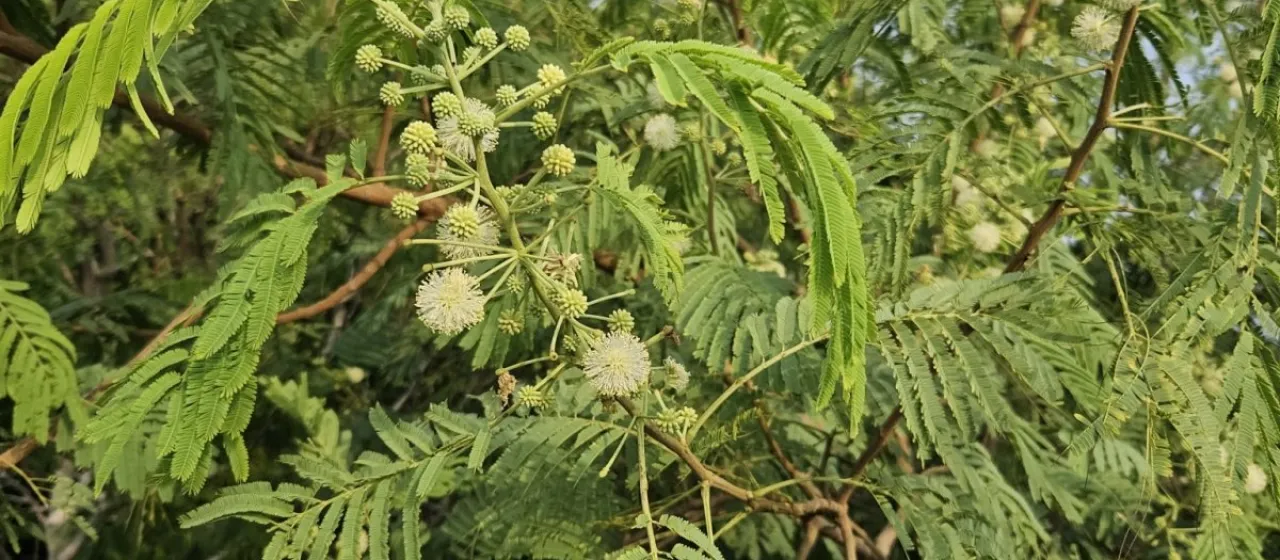
Description
Great leadtree (Leucaena pulverulenta) is a perennial leguminous tree belonging to the family Fabaceae. Renowned for its rapid growth rate and high biomass productivity, it serves as a critical resource in tropical and subtropical forestry and agro-industrial systems.
The species is native to northeastern Mexico and southern Texas. It has been widely introduced across various tropical regions globally, where it adapts well to diverse climates, ranging from humid lowlands to semi-arid areas, provided there is sufficient moisture for establishment.
Botanically, it is distinguished by its feathery, bipinnate leaves and pubescent young stems, which give the plant its characteristic powdery appearance. As a member of the legume family, it plays a vital role in nitrogen cycling by fixing atmospheric nitrogen through root nodules, which improves soil fertility.
Agricultural success depends on full sun exposure and well-draining soil types. While it tolerates various soil conditions, it thrives best in deep, fertile soils. Management practices usually involve periodic pruning or coppicing to maintain high forage quality and to manage stand density for optimal timber or biomass yield.
The economic utility of the Great leadtree includes:
- Production of fuelwood and pulpwood for the paper industry.
- Use as a high-protein forage source for livestock.
- Soil stabilization and erosion control on steep slopes.
- Carbon sequestration initiatives in agroforestry landscapes.
The crop is susceptible to specific pests, notably the leucaena psyllid (Heteropsylla cubana), which can impact leaf growth if populations are not managed. Effective integrated pest management (IPM) strategies, including the use of resistant genotypes, remain the primary method for ensuring commercial crop viability.