
Description
Leucaena trichodes is a fast-growing leguminous tree belonging to the Fabaceae family. Renowned for its significant role in nitrogen fixation and high biomass production, this perennial species is considered a valuable resource for ecological restoration and sustainable agricultural systems in tropical and subtropical regions.
Native to the regions of South and Central America, including countries like Brazil and Colombia, this plant thrives in diverse environments. Its range encompasses moist forest fringes and savanna-like landscapes, where the species demonstrates remarkable resilience to environmental variability and nutrient-poor soils.
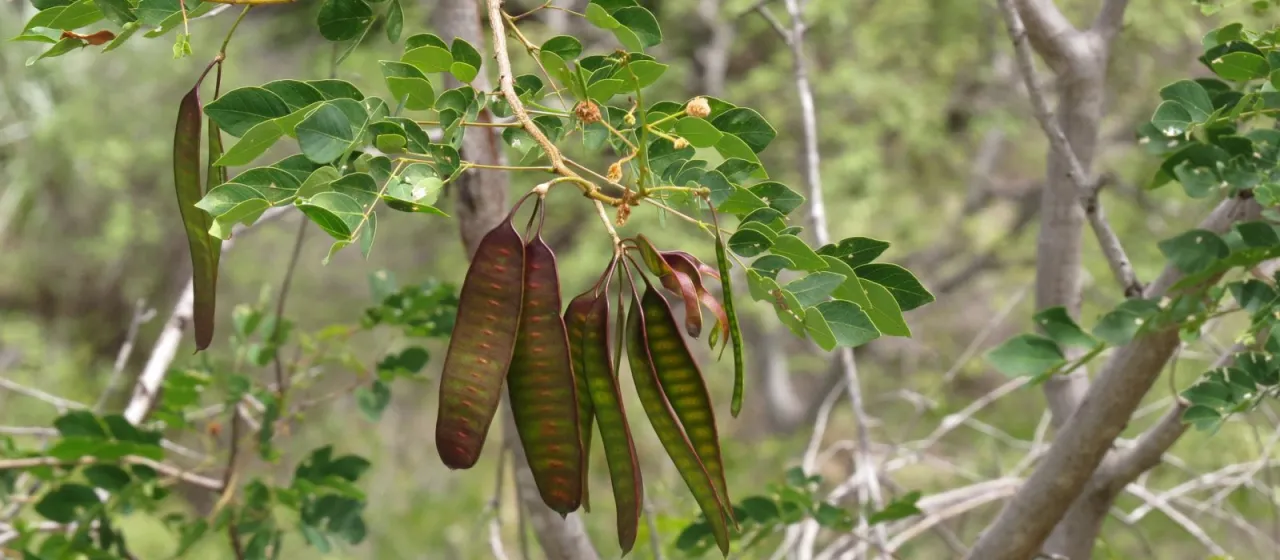
Botanically, it is characterized by its feathery, bipinnate foliage and spherical inflorescences that develop into flattened pods. The plant features a robust taproot system, which allows it to thrive during seasonal drought and access minerals from deep soil horizons, contributing to its reputation as a hardy and adaptable crop.
Regarding cultivation requirements, Leucaena trichodes prefers well-drained soils and thrives under intense sunlight. Proper agricultural management involves regular pruning to stimulate fresh growth, which enhances biomass yields. During the initial planting stages, it is essential to keep the surrounding area free of aggressive weeds to ensure the young saplings establish themselves successfully.
The agricultural and economic utility of this plant is extensive, covering several critical areas:
- Protein-rich fodder production for ruminant livestock.
- Soil nitrogen enrichment through symbiotic relationships with bacteria.
- Agroforestry integration for live fencing and windbreaks.
- Sustainable fuelwood production for rural energy needs.
While generally hardy, the plant can be susceptible to specific pests, such as psyllids, which feed on tender foliage. Effective management strategies include selecting resistant variants, monitoring for infestations, and ensuring proper spacing between trees to prevent the spread of fungal diseases associated with poor ventilation or waterlogged soil conditions.