
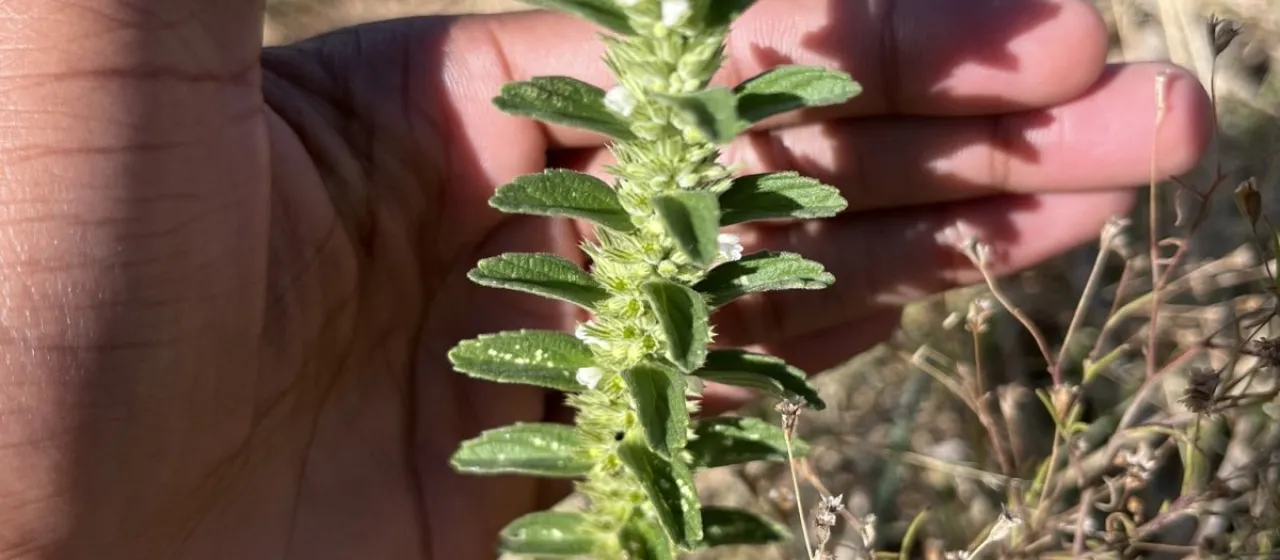
Description
Leucas neuflizeana is a distinctive plant species belonging to the Lamiaceae family. As a hardy herbaceous perennial, it has evolved to thrive in the challenging environmental conditions of its native African habitat. The plant is characterized by its resilience to drought and heat, making it an interesting subject for studies in arid-land agriculture.
Geographically, this species is primarily native to parts of Africa. It grows in open, sunny environments where it is adapted to survive with minimal rainfall. The plant's evolutionary history has enabled it to maintain steady growth even during prolonged dry seasons, which is a critical trait for any potential agricultural application in arid regions.
Botanically, Leucas neuflizeana displays typical Lamiaceae features, including square stems and opposite leaves. The foliage is often covered in fine trichomes (hairs), which serve as an adaptation to reduce water loss via transpiration and to reflect excessive sunlight. The inflorescences consist of dense whorls of flowers that are specialized for cross-pollination by local insects.
Regarding agrotechnical requirements, the species demands well-drained, porous soils. Heavy or waterlogged soil conditions are detrimental to the plant's root health and must be avoided. Regular exposure to full sun is essential for the plant to reach its physiological maturity and to ensure the proper development of its secondary chemical compounds.
The economic and practical utilization of Leucas neuflizeana is deeply rooted in traditional ethnobotany. Historically, it has been harvested for its therapeutic properties, often utilized as an herbal remedy. Modern research continues to explore its chemical profile to determine its potential as a sustainable source of bioactive ingredients for the pharmaceutical and nutraceutical industries.
- Family: Lamiaceae
- Habit: Herbaceous perennial
- Growth environment: Tropical arid and semi-arid zones
- Agricultural priority: Drought-resistant variety
- Primary use: Ethnopharmacology