
Description
Mingimingi (Leucopogon fasciculatus) is a hardy evergreen shrub belonging to the Ericaceae family. Known for its slender foliage and clustered appearance, this plant is a prominent feature in the native landscapes of New Zealand. It typically grows as a dense, woody shrub or a small tree, reaching heights of up to four meters depending on its specific environment and exposure.
The species is endemic to New Zealand, where it is found across both the North and South Islands. It thrives in diverse habitats, including coastal dunes, lowland scrub, and subalpine forests. This wide distribution highlights the plant's robust nature and its capacity to withstand varied climatic conditions, ranging from moderate coastal temperatures to cooler, high-altitude environments.
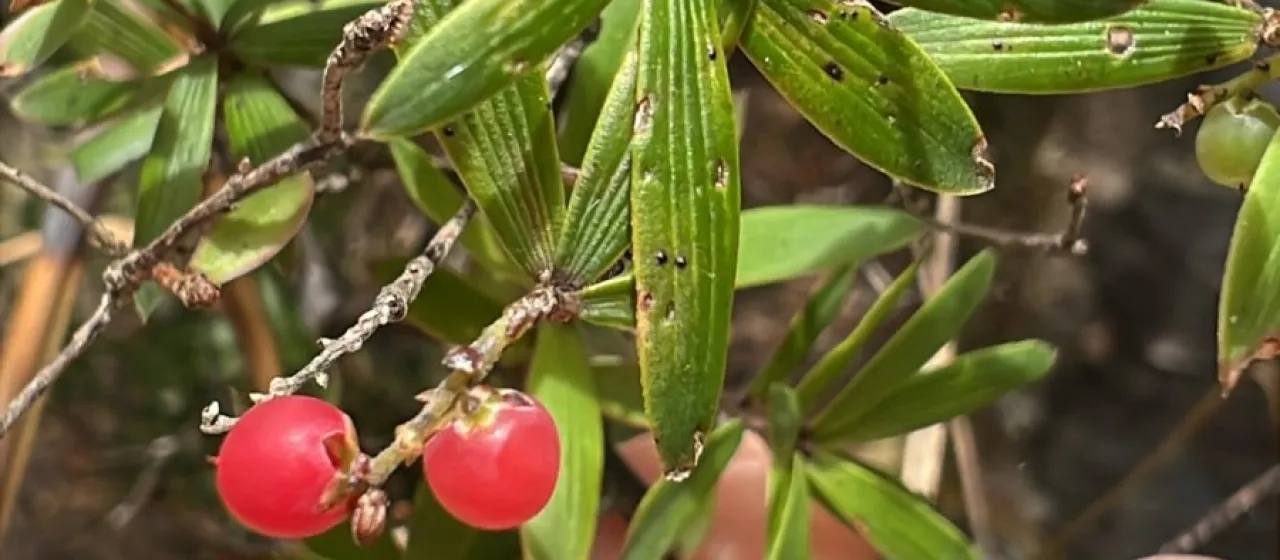
Botanically, the plant is distinguished by its narrow, stiff leaves that form tight clusters along the stems. During the flowering season, the plant produces an abundance of small, white, bell-shaped flowers arranged in racemes. These flowers are followed by small, round berries, which provide a vital food source for avian populations, playing a key role in local biodiversity.
Cultivation requirements for Leucopogon fasciculatus focus on drainage and light. It thrives in well-draining, slightly acidic soil profiles. While it is adaptable to various light conditions, it performs best in locations with partial to full sun. Regular maintenance should involve minimal pruning to preserve its natural shape and monitoring moisture levels to prevent waterlogging, which is detrimental to the root system.
- Requires well-drained, acidic soil conditions.
- Prefers sunny or partially shaded spots.
- Moderate pruning supports vigorous growth.
- Vulnerable to root rot in poor drainage.
The plant is primarily utilized in ornamental horticulture and conservation planting. Its ability to act as a screen or hedge makes it a favored choice for native garden layouts. While relatively resistant to major pests, growers should remain vigilant against scale insects and fungal pathogens, which can affect the foliage and stem health if the plant is under stress.