
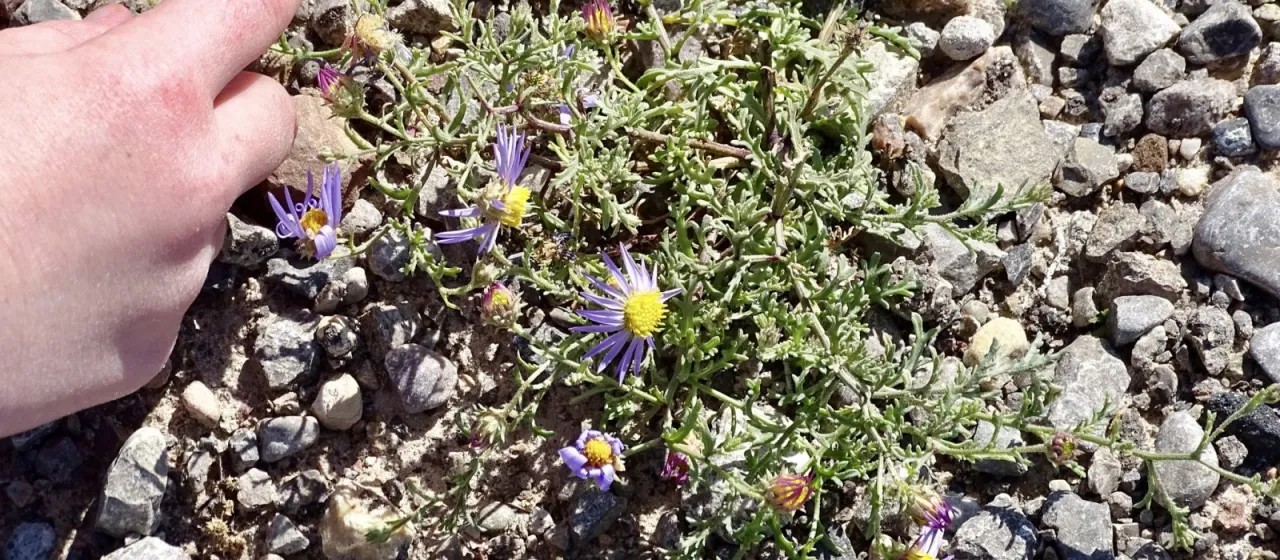
Description
Leucosyris parviflora is a perennial herbaceous plant belonging to the Asteraceae family. Within modern agricultural research, this species is recognized for its physiological resilience, making it a subject of interest for cultivation in marginal environments where water scarcity and soil quality are limiting factors for traditional crops.
The species originates from the arid and semi-arid regions of North America. Its natural habitat includes rocky slopes and sandy plains, which has shaped its evolution as a drought-tolerant plant. Agricultural interest in the species is focused on its ability to thrive in regions characterized by low precipitation and high solar radiation.
Botanically, the plant exhibits a robust root system optimized for water extraction. Its aerial parts consist of slender, erect stems with narrow, sparse leaves designed to minimize transpiration. The small flower heads are typical of the genus, appearing in distinct clusters during the late growing season. These structural features allow the plant to maintain growth cycles during prolonged dry spells.
Cultivation requirements involve selecting well-draining soils, as the root system is susceptible to decay in waterlogged conditions. Successful field establishment depends on proper seedbed preparation to ensure good soil-to-seed contact. Once established, the crop requires minimal intervention, although weed management during the seedling stage is essential to ensure uniform stand density.
The primary agricultural applications of this crop include soil stabilization and erosion control on degraded lands. It also shows potential as a supplementary forage resource for extensive grazing systems in arid zones. Common pests include root-feeding larvae, while fungal infections can occur if humidity levels are not controlled. Effective management involves maintaining optimal plant spacing and ensuring appropriate site selection to avoid stagnant moisture.