
Description
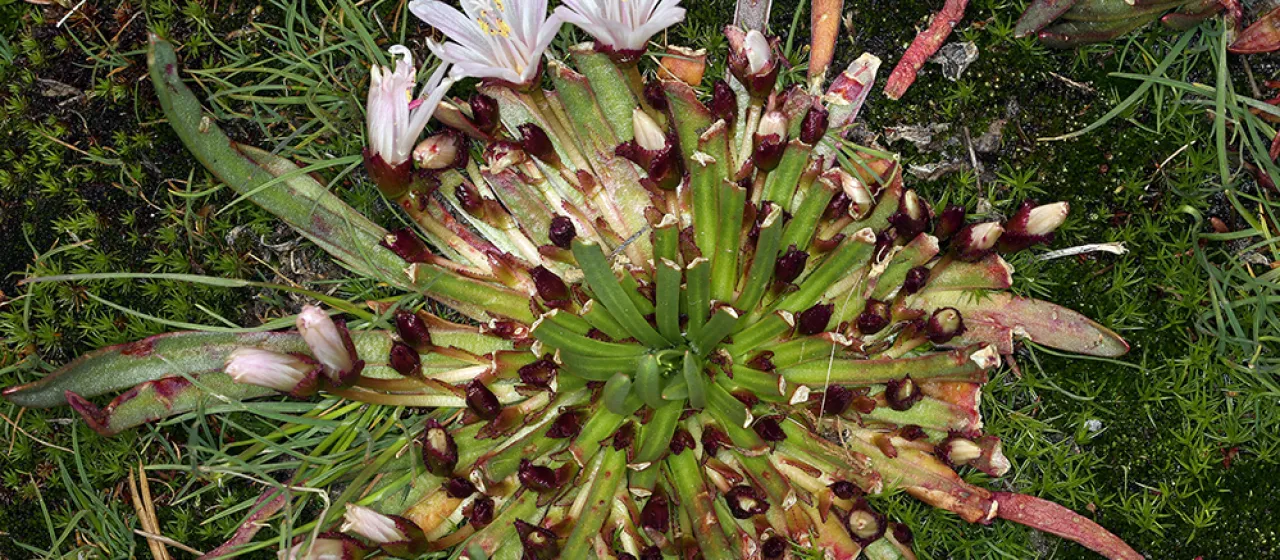
Lewisia longipetala is a perennial succulent plant species belonging to the Montiaceae family. Renowned for its stunning floral displays, this plant has become a favorite among enthusiasts of alpine and rock gardens, as it produces a dense cluster of vibrant, long-petaled flowers that contrast beautifully with its fleshy, succulent foliage.
The origin of this species is traced to the high mountain ranges of North America, particularly in the Sierra Nevada. In its natural habitat, it thrives in crevices and rocky slopes where the soil is mineral-rich but extremely fast-draining. This evolutionary background dictates its specific needs when cultivated in home gardens or specialized nurseries.
Botanically, the plant forms a basal rosette of spatulate leaves that remain evergreen or semi-evergreen. The inflorescences rise from the center of the rosette, bearing multiple flowers with petals that are notably elongated compared to other Lewisia species. The root system is thick and fleshy, evolved to store water during periods of mountain drought.
Agronomic requirements are centered on soil permeability. A successful cultivation medium should consist of a gritty, well-draining mixture of coarse sand, perlite, and small amounts of organic compost. The plants require a site that offers cool root temperatures and protection from harsh midday sun. Excessive soil moisture, especially during the dormant season, is the primary factor leading to root rot and mortality.
- Planting on a slope to ensure gravity-assisted water drainage.
- Using a grit mulch layer to prevent leaf contact with damp soil.
- Deep but infrequent watering, strictly avoiding the crown.
- Providing winter protection against excessive rain and freezing slush.
The primary horticultural use of this plant is as a specialty specimen in rock gardens, troughs, or alpine houses. While it is not a large-scale agricultural crop, its value in the nursery trade is significant. Pests such as aphids and slugs are common challenges, while Botrytis and root rot represent the main pathological threats caused by improper irrigation management.