Libertia paniculata
Libertia paniculata Spreng.
Description
Libertia paniculata, commonly known as branched libertia, is a perennial evergreen herb belonging to the Iridaceae family. While primarily categorized as an ornamental plant rather than a field crop, it is extensively propagated in nurseries for its architectural foliage and delicate floral displays.
The plant is native to eastern Australia, where it naturally inhabits forest margins and rocky embankments. Its cultivation is concentrated in regions that mirror its native temperate conditions, requiring a moderate climate to thrive and maintain its distinctive, grass-like leaf structure throughout the year.
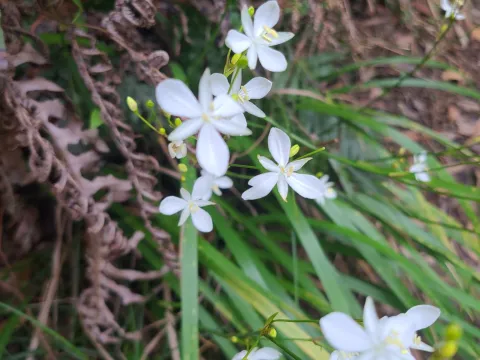
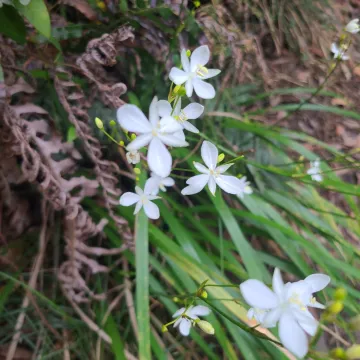
Botanically, it forms dense tufts of linear, rigid leaves. During the blooming season, it produces panicles of white, three-petaled flowers that rise above the foliage. These flowers eventually develop into seed capsules, which can be harvested if propagation is required, although division is the standard vegetative method.
Regarding agrotechnical requirements, it thrives in well-draining, humus-rich soil. It is essential to choose a location with dappled shade or protection from intense afternoon sun to prevent leaf scorching. Maintaining consistent soil moisture is crucial, though waterlogging must be avoided to prevent root rot diseases.
In terms of usage, it is a staple in landscaping, particularly for Mediterranean or native-style gardens. It is relatively resistant to common pests, but growers should watch for spider mites and snails. Effective maintenance involves clearing away dead foliage in late winter to encourage fresh spring growth and ensuring soil aeration.
Photo gallery