
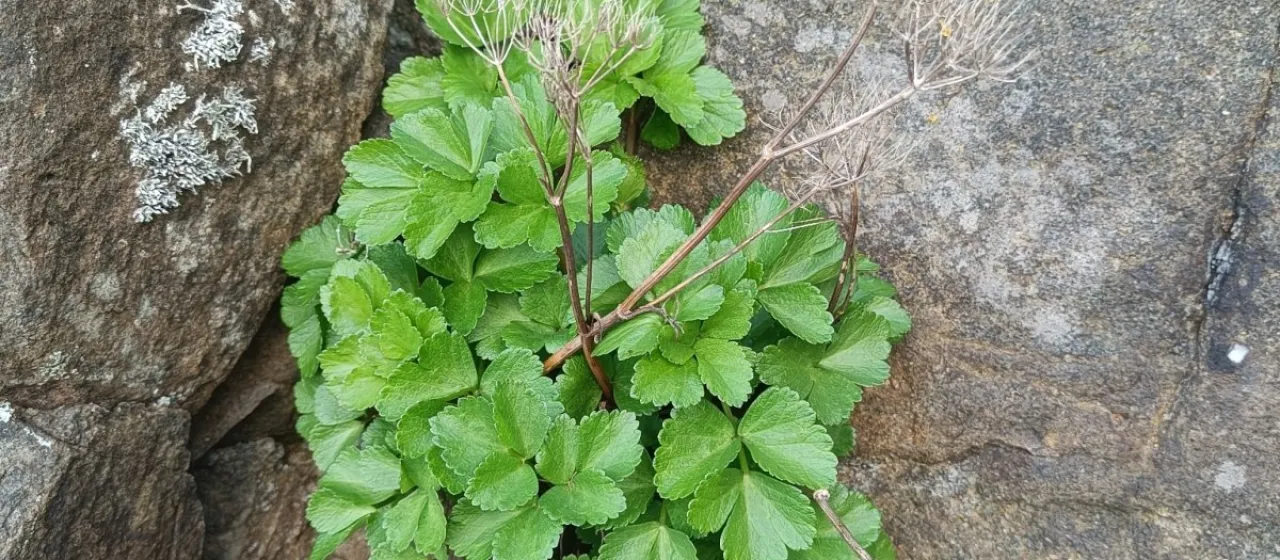
Description
Scottish lovage (Ligusticum scothicum) is a robust perennial herbaceous plant belonging to the Apiaceae family. Often referred to as sea parsley, this species is noted for its strong, pleasant aroma and its unique evolutionary adaptation to coastal environments, which provides it with excellent hardiness in northern climates.
The natural range of this species spans the North Atlantic coasts, including the British Isles, Scandinavia, Iceland, and parts of North America. It thrives in salt-sprayed habitats and rocky crevices, making it a highly resilient crop for cooler, maritime-influenced regions where other common herbs might struggle to survive due to excessive wind or humidity.
Botanically, it is characterized by dark green, glossy, compound leaves and strong, fleshy stems. The flowers appear as white or light pink umbels, blooming during the mid-summer season. Its root system is deep and persistent, allowing the plant to survive harsh winters and regenerate vigorously during the following spring season.
In terms of agronomy, Scottish lovage requires moist, fertile, and well-drained soil. While it prefers full sun, it can tolerate partial shade in areas with high summer temperatures. Consistent soil moisture is essential for maximum biomass production, and mulching can help maintain temperature stability for the roots during warmer months.
Economically, the plant is valued for its culinary use; the leaves and stems offer a flavor profile similar to celery or lovage, making them ideal for soups, stews, and fish preparations. The crop is relatively resistant to pests and diseases, though standard monitoring for aphids and fungal leaf spots is recommended to maintain high-quality yield for commercial distribution.