
Description
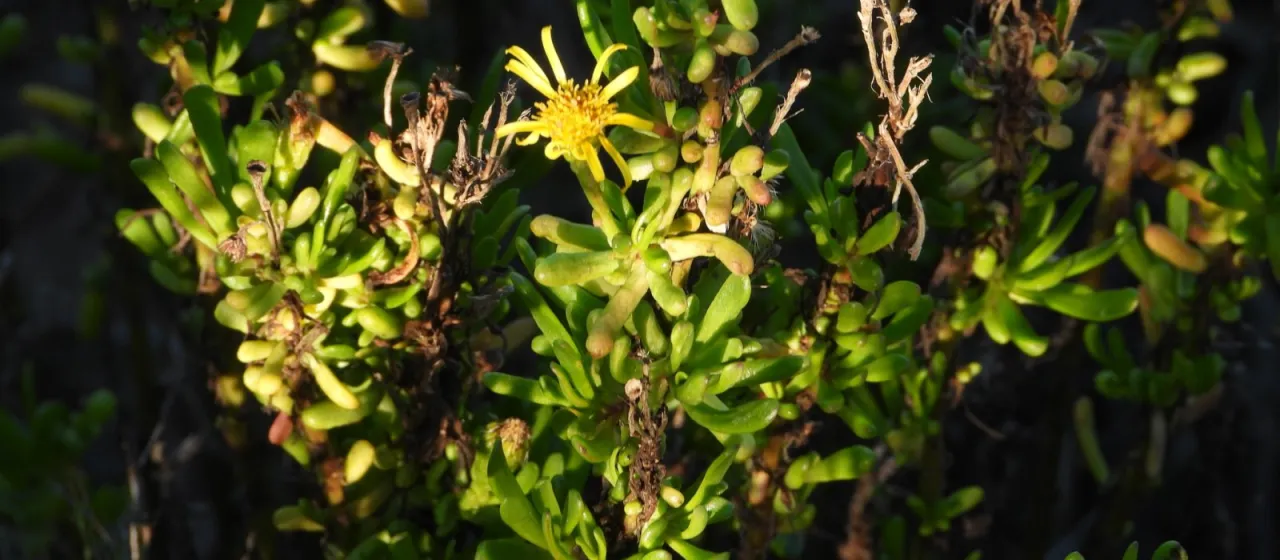
Limbarda crithmoides, commonly known as golden samphire, is a perennial herbaceous plant belonging to the Asteraceae family. Previously classified under the genus Inula, it is now formally recognized as Limbarda crithmoides. As a notable halophyte, it has evolved to thrive in environments with high salinity levels, which distinguishes it from conventional agricultural crops.
The plant originates from the coastal regions of the Mediterranean and the Atlantic, spreading across Western Europe and Northern Africa. Its native habitat includes salt marshes, cliffs, and estuaries. In agricultural terms, it is increasingly viewed as a valuable resource for utilizing saline-affected soils, providing a productive alternative to conventional farming in challenging geographic areas.
Botanically, it is a succulent shrub, reaching heights of up to 70 centimeters. Its foliage consists of fleshy, narrow leaves with a characteristic salty flavor, which is a result of its adaptation to saline environments. The plant produces vibrant yellow flower heads during the late summer and autumn seasons. Its root system is exceptionally robust, allowing it to maintain stability in unstable coastal substrates and to regulate mineral uptake efficiently.
Cultivation requirements focus on high light exposure, well-drained soil, and proper moisture management. While it is naturally salt-tolerant, optimal growth rates are achieved when soil salinity levels are balanced during the germination phase. Farmers should prioritize mineral-rich soils and avoid waterlogging, which can cause root rot. The species is relatively low-maintenance once established, requiring minimal intervention compared to traditional irrigation-intensive crops.
Key areas of economic utilization include:
- Culinary use: The leaves are widely consumed as a specialty vegetable, often referred to as sea samphire.
- Pharmaceuticals: Research highlights its potential in developing anti-inflammatory and antioxidant products.
- Environmental restoration: Utilizing the plant for soil phytoremediation in saline agricultural zones.
- Ornamental landscaping: Valued for its endurance and yellow floral displays in coastal gardens.
Typical pests affecting this crop include aphids and spider mites, especially under greenhouse conditions. Pathogens, such as powdery mildew or rust, can affect the plant if ventilation is insufficient or if humidity remains high for extended periods. A successful management strategy involves regular crop monitoring, maintaining appropriate plant density to promote air circulation, and avoiding excessive overhead irrigation during the flowering stage.