
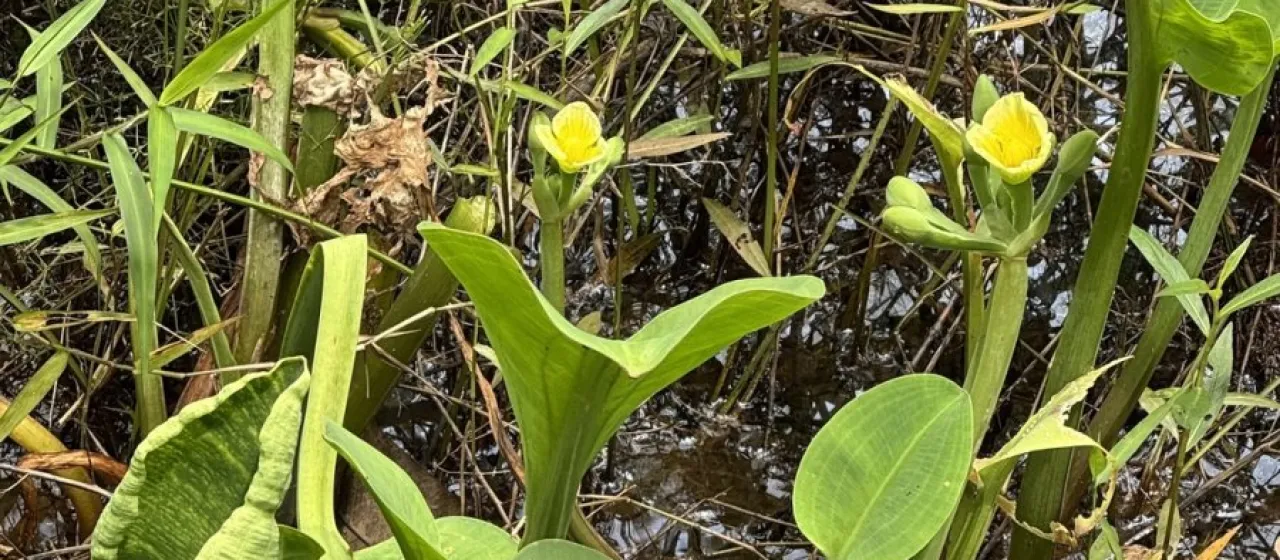
Description
Limnocharis flava, commonly known as the yellow velvetleaf or yellow burr-head, is a perennial aquatic plant belonging to the Alismataceae family. It is a well-established agricultural crop, particularly in Southeast Asia, where it is grown in wetland paddies and shallow freshwater environments as a staple vegetable.
Originating from tropical Central and South America, the species has naturalized across many tropical regions worldwide. It thrives in warm, humid climates and is highly adapted to growing in waterlogged soils, making it an ideal candidate for cultivation in areas where traditional dry-land crops cannot survive.
Botanically, the plant features a rosette of succulent leaves with long petioles rising from a fibrous root system. Its distinct yellow flowers are a defining characteristic, blooming in small clusters atop stalks. The plant is prolific in its reproductive cycle, producing numerous small seeds that disperse easily through water flow, which contributes to its status as a robust agricultural plant.
Cultivation requires specific environmental conditions, including fertile, silty mud and consistent water levels. Farmers maintain the water depth at approximately 15 to 30 centimeters to optimize growth. While it is hardy, the crop responds positively to nitrogen-rich environments, often benefiting from the natural nutrient cycle found in irrigated paddy systems.
The agricultural utility of Limnocharis flava is diverse. Primarily consumed as a vegetable, the succulent leaves and flower stalks are boiled or steamed to remove bitterness. Beyond human nutrition, it serves as a supplement for livestock feed. While generally resistant to pests, farmers must monitor for snails and specific aquatic fungal pathogens that can affect plant vitality in stagnant water conditions.