
Description
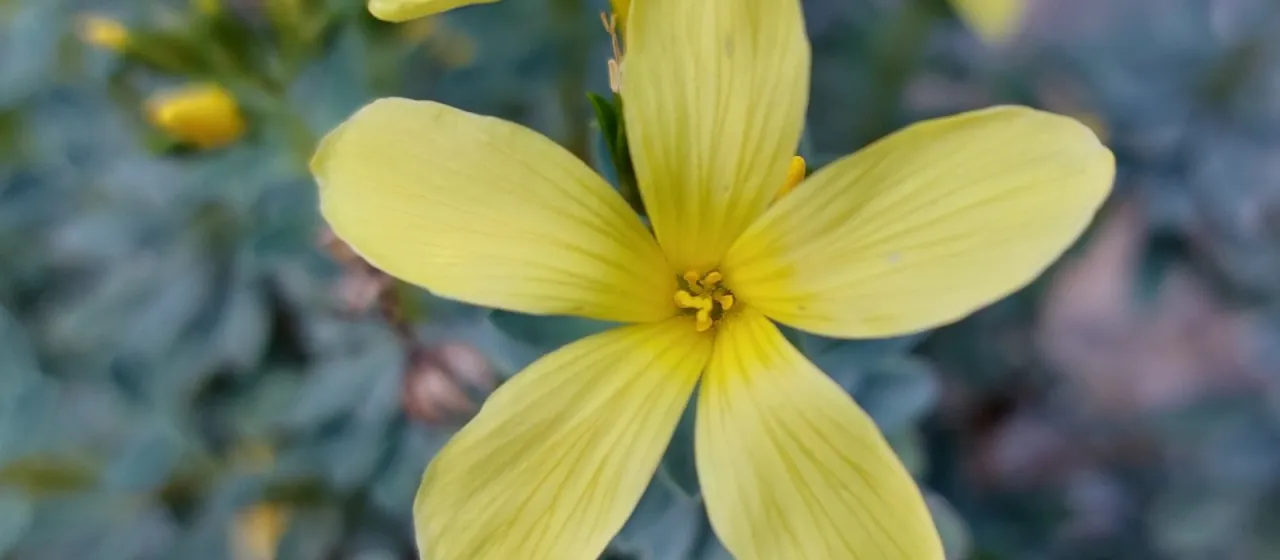
Tree flax (Linum arboreum) is a charming evergreen subshrub belonging to the Linaceae family. Unlike its annual relatives grown for fiber, this species is cultivated primarily for its ornamental value, characterized by its shrubby, woody base and clusters of bright, buttery-yellow flowers.
The plant is native to the eastern Mediterranean, specifically found on the islands of Greece. Its natural habitat includes limestone cliffs and rocky slopes, which dictates its preference for well-drained, alkaline soils and significant sun exposure, reflecting the conditions of its native Mediterranean climate.
Botanically, the plant features narrow, glaucous leaves that form dense rosettes. During late spring, the plant displays terminal panicles of large, vivid yellow blooms. Its compact stature, usually reaching about 30 to 40 centimeters in height, makes it an ideal candidate for rock gardens and borders.
Agricultural and horticultural success with tree flax depends heavily on soil drainage. It cannot tolerate "wet feet," as excessive soil moisture, especially during dormancy, often leads to root rot. Providing a gritty, mineral-rich substrate is essential for maintaining plant health and longevity.
Maintenance is generally low, requiring only occasional deadheading to prolong the flowering season and protect the plant from extreme frost during the winter. While quite drought-tolerant once established, it benefits from supplemental water during the peak growing season in hot, dry environments.
- Requires full sun exposure.
- Perfect for xeric gardens and rockeries.
- Needs sharp drainage to thrive.
- Pruning helps maintain a compact, bushy shape.
- Susceptible to fungal issues if humidity is too high.