
Description
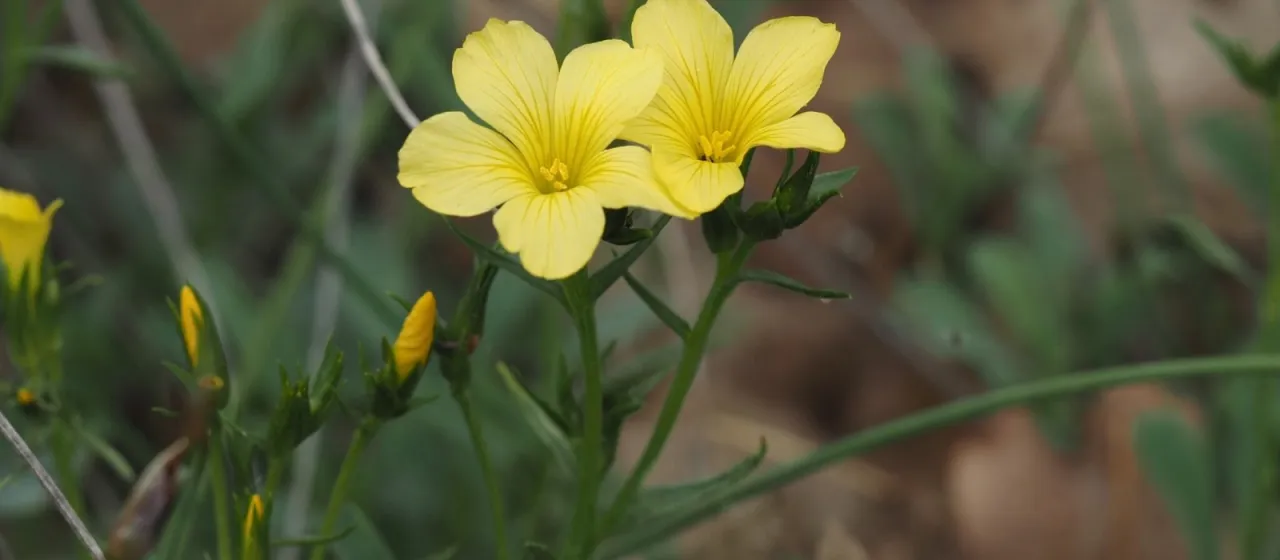
Bell flax (Linum campanulatum) is a perennial herbaceous plant belonging to the Linaceae family. Unlike common commercial flax, this species is primarily cultivated for its high ornamental value, making it a popular choice for rock gardens, borders, and alpine-style landscaping due to its vibrant flowering display.
The plant originates from the southern regions of Europe, specifically the Mediterranean and mountainous areas. Its natural habitat includes rocky slopes and calcareous substrates, which has shaped its physiological adaptation to well-drained, nutrient-poor, yet mineral-rich environments throughout its evolution.
Botanically, it typically reaches a height of 30 to 40 cm, forming a bushy habit with alternate, lanceolate leaves that often carry a glaucus hue. The most distinct feature is its relatively large, bell-shaped, golden-yellow flowers that bloom in terminal clusters, providing a striking contrast to the foliage.
The agronomic requirements for Linum campanulatum focus on mimicking its natural mountain environment. It thrives in full sun and requires exceptionally well-drained soil, preferably with a slightly alkaline pH. Excessive soil moisture, especially during winter months, is the primary cause of failure in cultivation, necessitating careful soil site selection.
Regarding its utility, the plant is widely used in landscape design to provide color and texture in arid or rocky garden sections. While generally hardy, the plant can be susceptible to typical Linum pests such as flax beetles and fungal pathogens like rust. Preventive measures, including proper spacing to ensure air circulation and avoiding overhead irrigation, are essential for maintaining plant health.