
Description
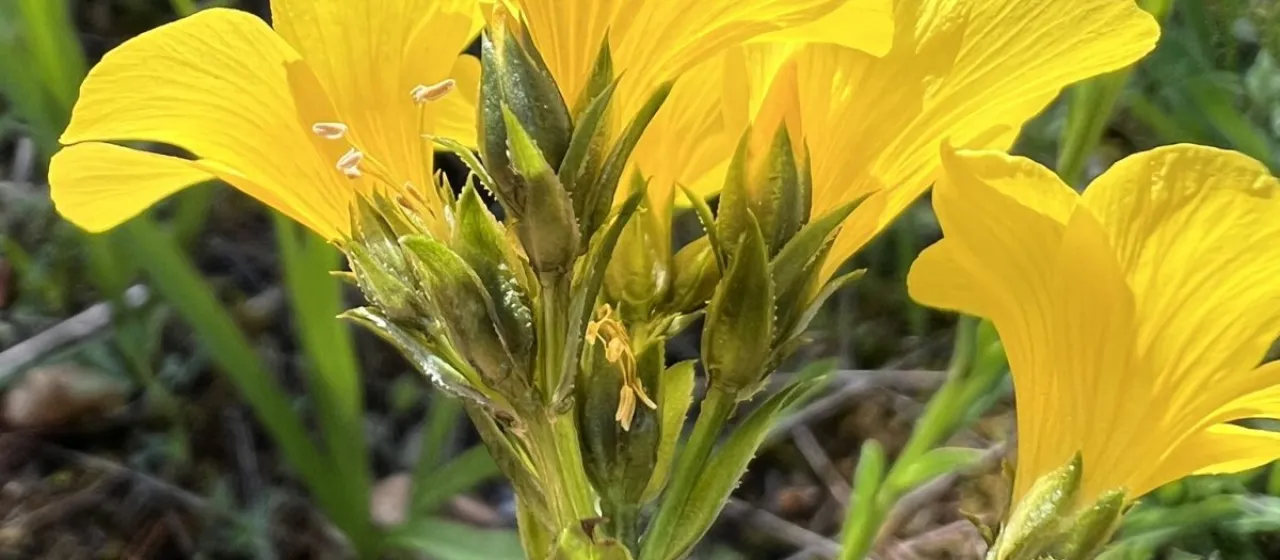
Linum capitatum, commonly known as head-flowered flax, is a perennial herbaceous plant belonging to the Linaceae family. Distinguished by its compact, head-like inflorescence, it stands out from the traditional fiber-producing flax species. This plant is primarily recognized for its environmental resilience and specific aesthetic features.
The native range of this species extends across parts of Southeastern Europe and Asia Minor. It typically inhabits dry, rocky slopes and calcareous steppe environments. This natural adaptation allows the plant to thrive in nutrient-poor substrates where typical agricultural crops would struggle to establish themselves effectively.
Botanically, the species features upright stems reaching up to 40 centimeters in height, adorned with narrow, sessile leaves. The flowers are notable for their bright yellow coloration and characteristic five-petaled structure. The fruit is a capsule that protects the seeds, ensuring efficient dispersal in dry climates through natural dehiscence.
Cultivation requirements for Linum capitatum emphasize the need for full sunlight and excellent drainage. The plant prefers slightly alkaline, sandy, or rocky soils. It is highly drought-tolerant, making it an excellent candidate for low-maintenance landscapes. Excessive irrigation and soil compaction must be avoided to prevent root decay and developmental stagnation.
The practical applications of this plant are largely focused on its ornamental and research value:
- Usage in rock gardens and xeriscaping projects due to its water-saving properties.
- Scientific studies into its genetic tolerance to abiotic stressors.
- Conservation of native biodiversity within specialized botanical gardens.
While relatively hardy, the plant can be susceptible to common flax pests, including flea beetles that target young seedlings. Fungal infections, such as Fusarium wilt or root rot, may occur if the soil moisture level is not properly controlled. Maintaining optimal spacing and ensuring superior air circulation around the plants are essential for disease prevention.