
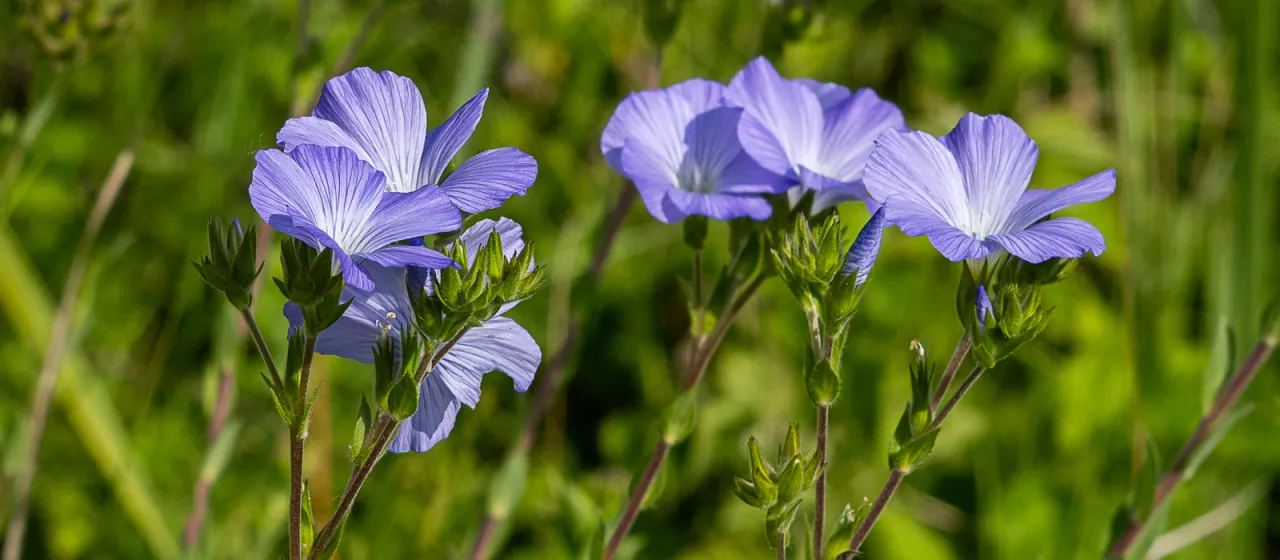
Description
Hairy flax (Linum hirsutum) is a perennial herbaceous plant belonging to the Linaceae family. Unlike commercial varieties of flax cultivated for fiber or oilseeds, this species is noted for its distinctive morphological features and its role as a hardy wild plant in various ecosystems.
The plant is native to Central and Eastern Europe, typically found in steppe regions, meadows, and along dry, rocky slopes. Its natural distribution demonstrates an adaptation to temperate climates that experience distinct seasons and moderate precipitation levels.
Botanically, the plant is characterized by erect stems densely covered in stiff, glandular hairs, which gives it the common name "hairy flax." Its leaves are alternate and lanceolate in shape. The flowers are striking, typically featuring a vibrant purple or blue hue, arranged in loose terminal cymes that bloom throughout the peak summer months.
In terms of cultivation, this species thrives in well-drained, fertile, and slightly alkaline soils. It is remarkably drought-tolerant, owing to a deep and well-developed root system. Proper site selection is essential; the plant requires full sun exposure and good air circulation to minimize the risk of moisture-related pathogens.
While not a major commercial agricultural crop, Linum hirsutum holds significant value in ecological restoration projects and ornamental gardening due to its aesthetic appeal and low maintenance needs. It serves as an important honey plant for local pollinators. Farmers and gardeners should monitor for common flax pests, such as flea beetles, and ensure proper drainage to prevent fungal infections like Fusarium wilt.