
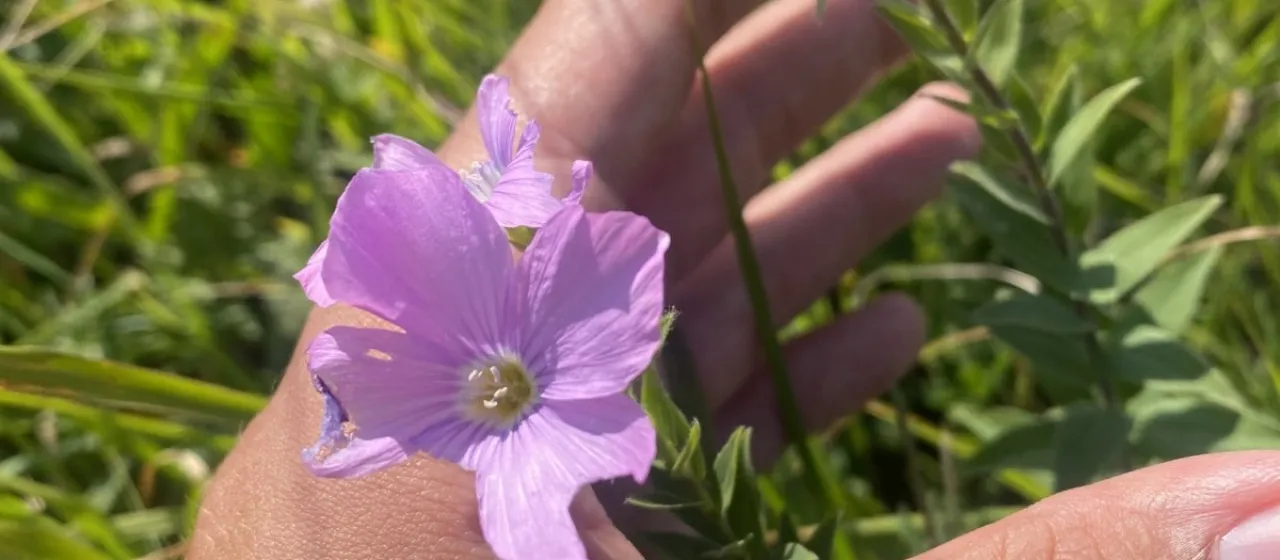
Description
The Hypericum-leaved flax (Latin Linum hypericifolium) is a perennial herbaceous plant belonging to the Linaceae family. Unlike common commercial flax, this species is primarily cultivated for its ornamental properties and its ability to thrive in challenging, rocky habitats that are often unsuitable for other plants.
The native distribution area of this species is centered around the mountainous regions of the Caucasus. It is naturally adapted to high-altitude climates characterized by significant temperature fluctuations and thin, nutrient-poor soils. In cultivated environments, it retains its wild characteristics, preferring well-lit, open positions.
Botanically, this flax is defined by its slender, branching stems that reach moderate heights and its striking flowers, which often feature shades of blue or violet. The specific epithet refers to the foliage shape, which bears a resemblance to certain species of St. John's wort (Hypericum), providing a unique aesthetic texture to the plant.
Agronomic requirements for this species focus heavily on drainage. Hypericum-leaved flax requires a substrate that does not retain excess water, such as sandy, gritty, or rocky soils. Over-watering is the most common cause of failure in cultivation, as high soil moisture levels frequently lead to the development of crown rot and other fungal diseases.
Management of pests and diseases primarily involves prevention. Common issues include infestations by aphids, which can be managed with organic soaps or horticultural oils if discovered early. Due to its specific growth habit, this plant is best utilized in rock gardens, scree beds, or as a feature plant in low-maintenance landscapes where its resilience and distinct floral beauty can be showcased effectively.