
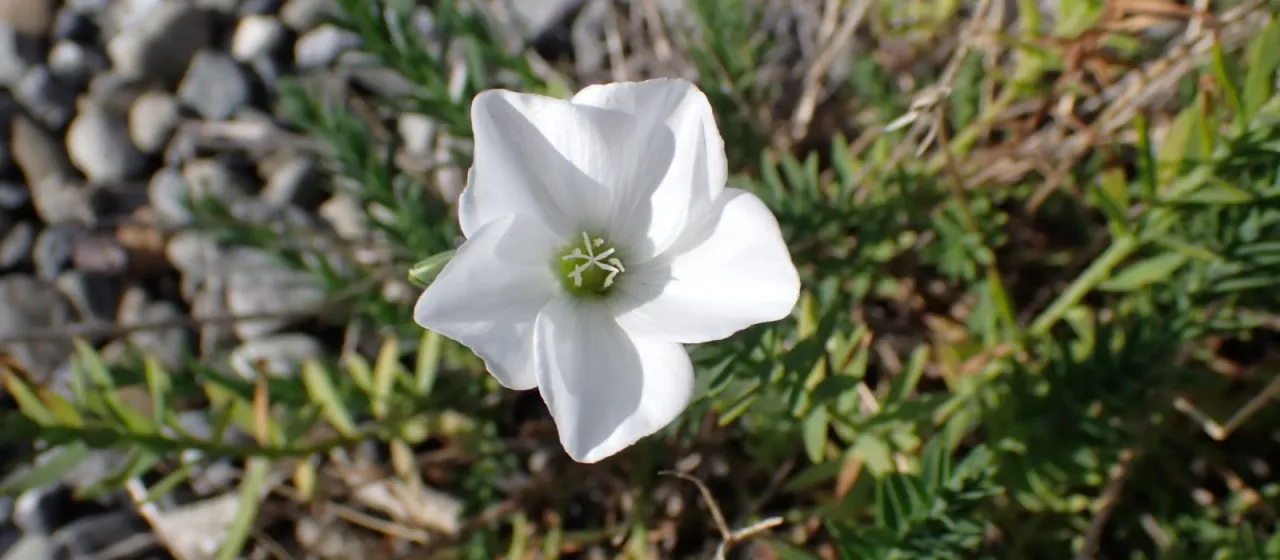
Description
New Zealand linen (lat. Linum monogynum) is a perennial herbaceous plant belonging to the Linaceae family. Unlike common flax (Linum usitatissimum), which is cultivated for fiber and oil, this species is primarily valued as an ornamental plant due to its striking white blooms and elegant habit.
The plant is native to New Zealand, where it naturally occurs on rocky bluffs, coastal cliffs, and open hillsides. This habitat has endowed the species with high tolerance for wind and coastal conditions, making it an exceptionally hardy plant in well-drained, sunny environments. Its distribution spans across both the North and South Islands of New Zealand.
Botanically, Linum monogynum features branched, woody stems that form dense clumps typically growing 20 to 50 centimeters tall. The leaves are narrow, lanceolate, and possess a distinct glaucous or grey-green color. The flowers are large, pure white, and arranged in loose terminal cymes, appearing from late spring through mid-summer, providing a visually clean and aesthetic display.
Cultural requirements for success include full sun exposure and sharp drainage. It thrives in gritty, sandy, or rocky soil types and performs poorly in heavy, water-logged soils. The plant requires minimal fertilization, as it is adapted to nutrient-poor substrates. In colder climates, protection from excessive moisture during winter is critical to prevent root rot.
While primarily used in rock gardens and coastal landscaping, it is a plant of significant botanical interest. Typical pests include aphids, which may cluster on young foliage, and various fungal infections related to improper soil aeration. Maintaining a dry, sunny, and well-ventilated site is the most effective way to manage these issues and ensure healthy plant development.