
Description
New Mexico flax (Linum neomexicanum) is a botanical species belonging to the Linaceae family. Unlike traditional commercial flax species cultivated for fiber or oil production, this particular plant is recognized for its adaptation to high-altitude mountainous environments and specific ecological niches within its native range.
The plant is native to the southwestern United States, primarily found in New Mexico. It occupies habitats characterized by well-drained rocky soils and sparse vegetation. This restricted geographic distribution contributes to its unique biological traits, allowing it to thrive where other, more fragile varieties would struggle to survive.
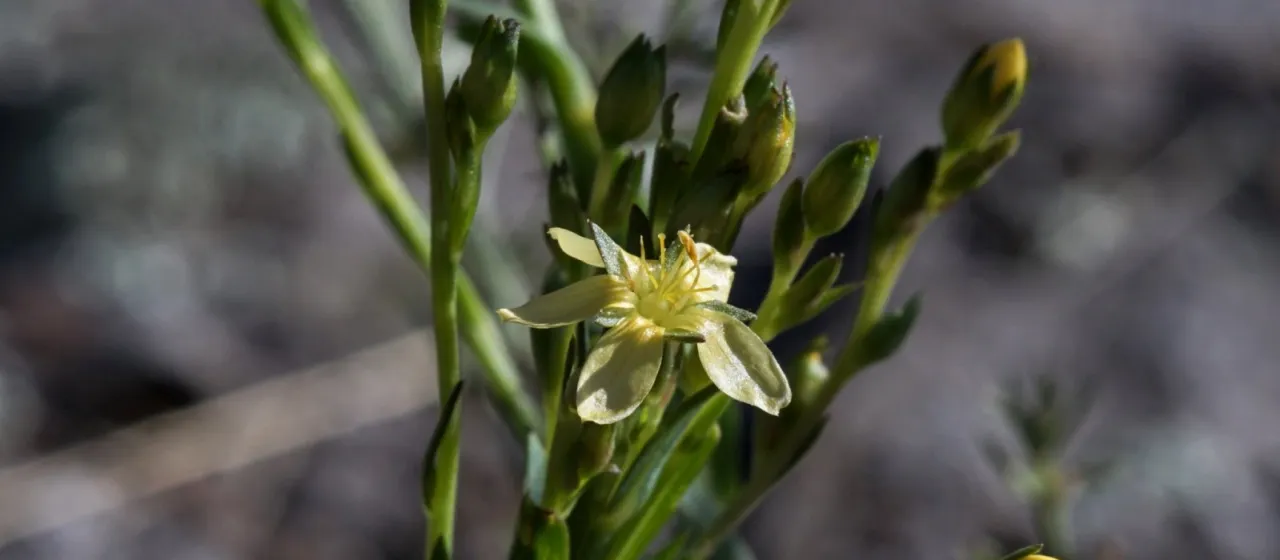
Morphologically, Linum neomexicanum exhibits thin, delicate stalks and narrow, alternate leaves. It produces distinctive yellow-to-cream-colored flowers that distinguish it from the more common blue-flowering flax varieties. Its root system is structured to maximize water uptake in mineral-rich, stony ground typical of its natural habitat.
Agronomic requirements for this species are centered on light, aerated soil with excellent drainage. In experimental or conservatory settings, the plant requires consistent sun exposure and protection from competitive invasive species. Since it is not a high-input crop, managing its growing cycle involves ensuring it does not suffer from waterlogging or nitrogen-rich soil, which can be detrimental to its development.
The primary utility of this plant lies in its value as a genetic reservoir. Researchers interested in drought resistance and adaptation to extreme soil conditions study Linum neomexicanum to identify specific genes that could improve the resilience of commercial linseed crops. It is also used occasionally in native plant restoration projects in its home region.
- Native to the rugged terrains of New Mexico.
- Distinct yellow flowers typical of the species.
- High tolerance to arid and rocky conditions.
- Valuable genetic source for stress-resilient breeding.