
Description
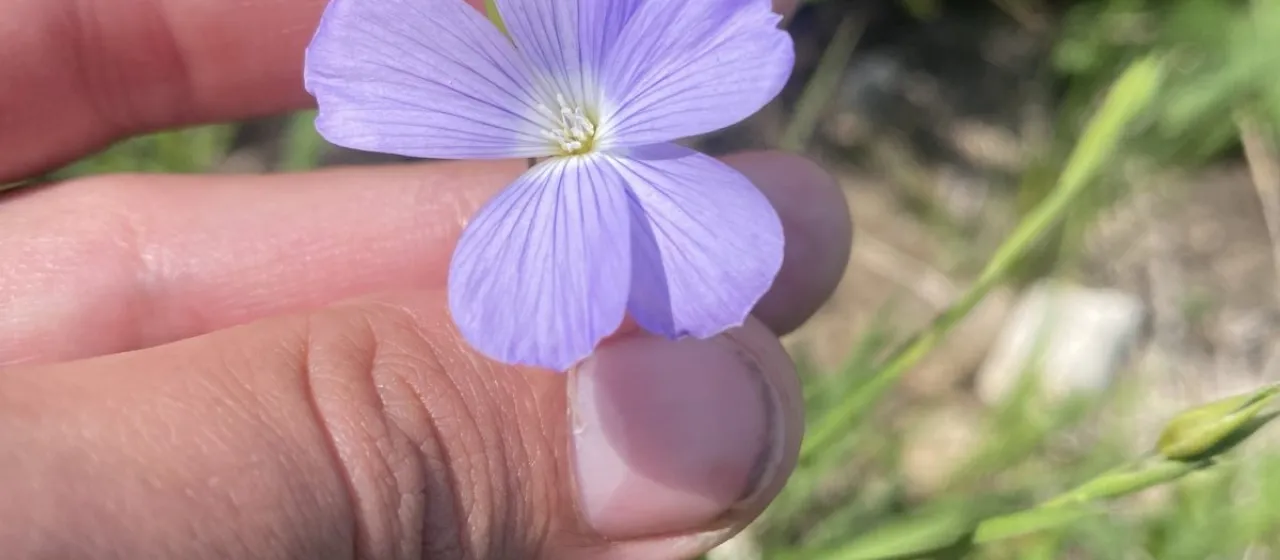
Nerved flax (Linum nervosum) is a perennial herbaceous plant belonging to the Linaceae family. It is a wild relative of the commercial flax crop, distinct in its morphological structure and specific ecological requirements, which allow it to thrive in challenging environments where typical agricultural varieties might struggle.
The native range of this species primarily includes the Caucasus region and parts of Western Asia. It is typically found in rocky habitats, open meadows, and sparse woodlands. The plant is well-adapted to high-light environments and demonstrates significant resilience to semi-arid conditions, thanks to its specialized physiological responses to water stress.
From a botanical perspective, the plant is distinguished by the prominent nerves (veins) on its leaves, which gives it its specific name. It typically grows as a clump-forming herb with branched stems reaching heights of up to half a meter. The leaves are generally lanceolate, and the flowers possess the classic five-petaled structure common to the genus, appearing in shades ranging from light blue to pale white.
Agricultural requirements for Linum nervosum focus on well-draining, nutrient-poor, or average soils with a neutral pH. The species is highly intolerant to waterlogging, which often induces root rot and pathogen colonization. Effective cultivation requires full sun exposure and careful weed management during the establishment phase, as the plant does not compete well with vigorous invasive weeds.
The primary economic use of nerved flax is centered around its ornamental potential in rock gardens and its value as a genetic reservoir. While it lacks the long, soft fibers necessary for large-scale textile manufacturing, it remains a subject of research for its resilience traits, which can be potentially transferred to domesticated flax varieties through breeding programs to enhance drought tolerance and disease resistance.
- High adaptation to rocky and arid habitats.
- Essential need for well-drained substrate.
- Limited fiber quality for textile purposes.
- Significant potential for xeriscaping and landscape design.