
Description
Steller's flax (Latin: Linum stelleroides) is a herbaceous perennial plant belonging to the Linaceae family. Unlike commercial flax varieties grown primarily for fiber or oil, this specific species is valued for its remarkable resilience and ecological niche adaptability within its native habitats across the Far East and Northeast Asia.
The plant originates from the regions of the Russian Far East, China, and the Korean Peninsula. It typically thrives in open, sunny environments such as rocky slopes, meadows, and sandy terrains. This geographical range suggests high tolerance to temperature fluctuations and limited nutrient availability, which are key traits for potential agricultural cross-breeding.
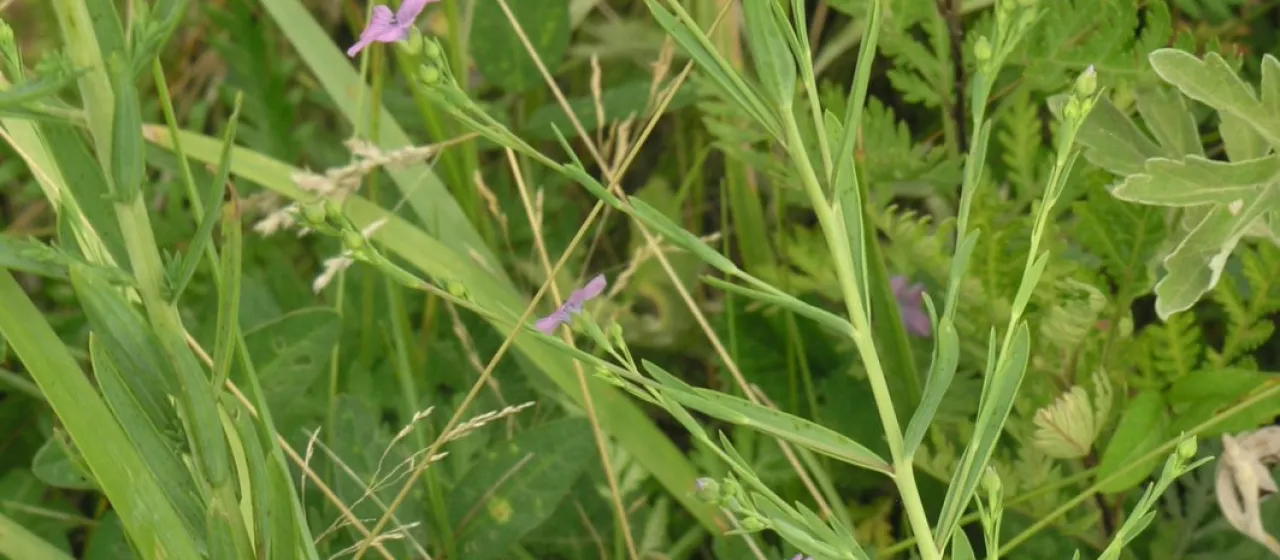
Botanically, Linum stelleroides is characterized by slender stems and linear leaves arranged alternately. The flowers, which are the hallmark of the species, exhibit a delicate blue-violet hue. The root system is relatively extensive for the plant's size, allowing it to maintain structural integrity in arid soil conditions during the peak of summer heat.
Regarding cultivation requirements, the plant prefers well-drained soils and does not thrive in waterlogged conditions. It is highly resistant to cold, making it a viable candidate for regions with short growing seasons. Soil pH should ideally be neutral or slightly alkaline. Proper site selection and careful preparation of the seedbed are critical for establishing uniform stands.
The potential хозяйственное (economic) use of this culture includes several specialized fields:
- Genetic research for developing climate-resilient flax hybrids.
- Use in sustainable landscaping for dry, challenging climates.
- Role in ecological restoration to prevent soil erosion in degraded areas.
Common issues affecting this crop include fungal pathogens like Fusarium wilt and insect infestations such as the flax flea beetle. Maintaining field hygiene and applying integrated pest management (IPM) strategies are essential for crop success. Future agronomic research is expected to focus on maximizing its yield potential through targeted fertilization and selective breeding programs.