
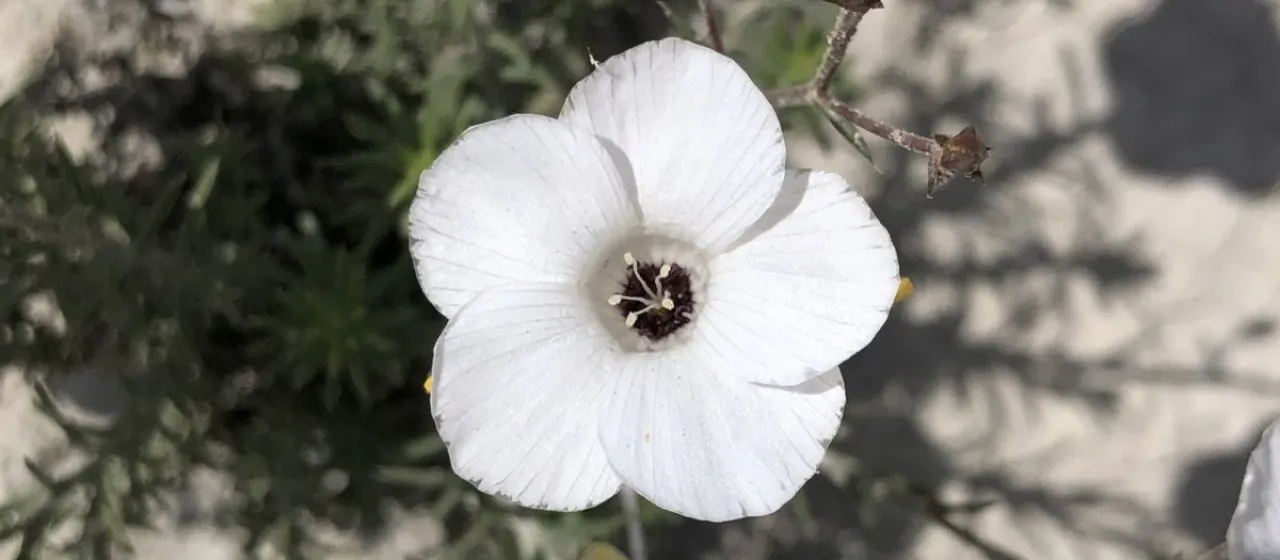
Description
Linum suffruticosum is a perennial subshrub belonging to the Linaceae family. Characterized by its woody base and dense, low-growing habit, this species differs significantly from common flax (Linum usitatissimum). It is primarily valued for its endurance and aesthetic appeal in xeriscaping.
The plant originates from the Western Mediterranean and the Iberian Peninsula. Its natural distribution is linked to sunny, rocky habitats and calcareous soils. This evolutionary background makes the species highly tolerant to nutrient-poor soil conditions and prolonged dry spells, as it has adapted to survive in extreme environments.
Botanically, it features narrow, linear leaves arranged on sturdy, branched stems. The flowers are relatively large, typically white, with distinct darker venation on the petals. Unlike annual flax, this perennial develops a deep and hardy root system that anchors the plant firmly in rocky substrates, allowing it to withstand harsh climatic fluctuations.
Regarding agricultural practices, Linum suffruticosum requires excellent soil drainage and full sun exposure. It is crucial to prevent moisture stagnation, as the roots are highly susceptible to rot in waterlogged conditions. The soil pH should ideally be neutral or slightly alkaline, reflecting its natural preference for limestone-rich environments.
The primary use for this species is ornamental, particularly in dry garden designs and rockeries where its drought resistance is an asset. Potential threats to the crop include:
- Flax beetle infestations during the seedling stage
- Root rot pathogens caused by improper drainage
- Rust fungi, which may occur in high humidity or stagnant air conditions