
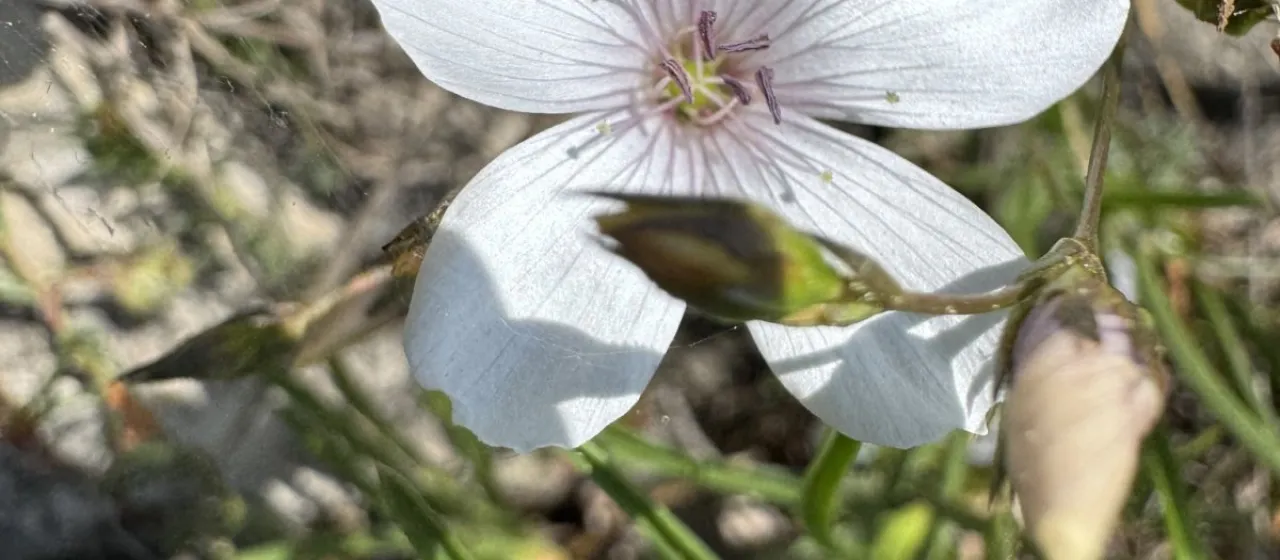
Description
Narrowleaf flax (Linum tenuifolium) is a perennial herbaceous plant belonging to the Linaceae family. Unlike industrial flax cultivars, this species is noted for its adaptability to harsh environments and is increasingly valued in sustainable agriculture and landscape restoration projects for its hardiness and ecological benefits.
The plant originates from Central and Southern Europe and parts of Western Asia. It is naturally found in dry meadows, rocky limestone slopes, and steppe ecosystems. Its ability to colonize nutrient-poor soils has made it a subject of interest for agronomists looking for crops that require minimal chemical inputs and exhibit high resource efficiency.
Botanically, Linum tenuifolium is characterized by thin, wire-like stems that grow in clusters, typically reaching 20–40 cm in height. Its leaves are narrow, linear, and arranged spirally. The plant produces delicate flowers ranging from white to pale purple, which serve as a nectar source for pollinators, contributing to biodiversity in the fields where it is cultivated.
Agricultural requirements focus on soil drainage and sun exposure. It thrives in alkaline or neutral, well-drained soils and cannot tolerate waterlogged conditions, which lead to root rot. Due to its evolutionary history in arid climates, it possesses excellent drought tolerance, requiring no irrigation once established, which makes it an ideal candidate for water-scarce regions.
In terms of plant health, narrowleaf flax is generally robust. However, as with most plants in the flax family, it can be susceptible to rust fungi (Melampsora lini) or aphids under unfavorable microclimatic conditions. Modern research focuses on using this species to enhance the stress tolerance of commercial flax varieties, marking its importance in agricultural breeding programs and future food security.