
Description
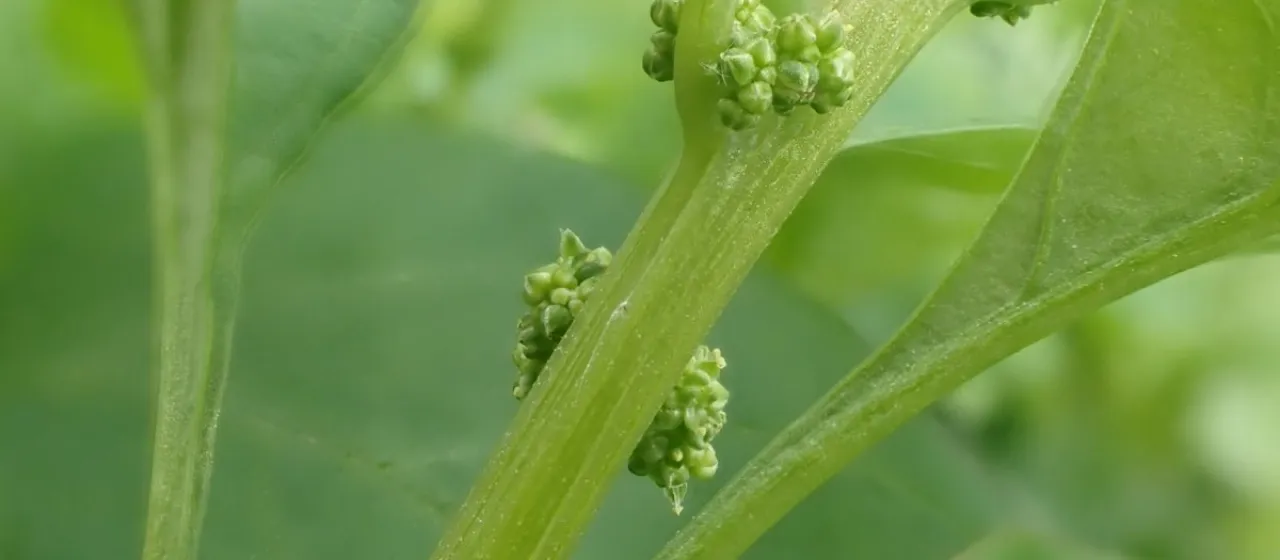
Many-seeded goosefoot (lat. Lipandra polysperma) is an annual herbaceous plant belonging to the Amaranthaceae family. Originally classified within the Chenopodiaceae subfamily, it is a significant species in botanical studies and agricultural ecology. It represents a resilient plant type capable of thriving in varied temperate climatic zones across the Northern Hemisphere.
The origin of the species is attributed to Eurasia, with a distribution range that now extends across most of Europe and North America. It is typically found in nitrogen-rich soils, including cultivated fields, gardens, and disturbed habitats. Its expansion is often linked to anthropogenic activities, as it effectively utilizes nutrient surpluses in agricultural fields to facilitate rapid biomass development.
Botanically, Lipandra polysperma is characterized by a height ranging from 10 to 60 centimeters. Its stems are often branched, and its leaves are ovate-rhombic in shape. The plant's reproductive efficiency is remarkably high; it produces a vast number of seeds that are dispersed by wind or water, allowing the species to maintain a strong presence in the seed bank of arable lands for several years.
Agronomic requirements for managing this plant focus primarily on controlling its density to minimize competition with primary crops. For successful development in controlled settings, the plant requires adequate moisture and moderate nitrogen levels. Mechanical cultivation and integrated pest management are the standard approaches used to regulate its growth in professional farming environments, especially in row-crop systems.
- High seed production capacity
- Adaptation to nitrogen-rich environments
- Rapid growth during the vegetative phase
- High phenotypic plasticity
In terms of economic utility, while it is often treated as a weed, its use as biomass or a soil-improvement cover crop is sometimes explored in specialized agricultural research. Common pests include aphids and specialized leaf-feeding insects. Disease management primarily involves monitoring for fungal issues like mildew, which can arise if the plant is grown in high-density conditions without proper ventilation.