
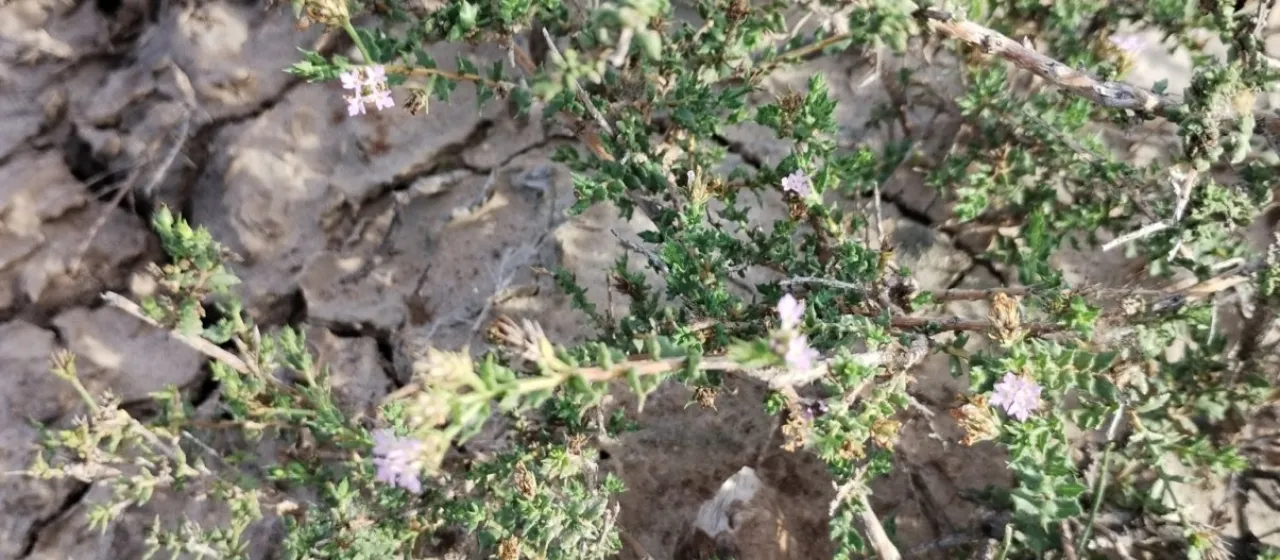
Description
Lippia salsa is a perennial herb belonging to the Verbenaceae family. It is recognized in agronomy primarily for its remarkable ability to thrive in highly saline environments where most conventional crops fail. This makes it a specialized subject of study for sustainable agriculture in arid and semi-arid regions.
The plant originates from the saline plains of South America, where it has evolved to occupy niches characterized by harsh edaphic conditions. Its natural distribution is largely defined by the presence of saline substrates, which the plant utilizes for its physiological processes. Currently, it is being evaluated for its potential to reclaim degraded agricultural lands worldwide.
From a botanical standpoint, Lippia salsa exhibits traits typical of xerophytic and halophytic plants. It possesses a robust root system and leaves specialized for salt sequestration and water conservation. Its growth habit is typically prostrate or low-shrubby, which helps in soil surface stabilization and provides a microclimate for moisture retention.
The cultivation requirements for Lippia salsa are relatively low, emphasizing its suitability for extensive farming systems. While it requires moisture during the initial establishment phase, once settled, it demonstrates exceptional drought tolerance. It thrives in soils with high levels of chlorides and sulfates, requiring little to no supplemental nitrogenous fertilization to maintain productivity.
In terms of хозяйственное usage, the primary application of Lippia salsa is soil remediation and the restoration of saline rangelands. It serves as a soil binder, preventing wind and water erosion in vulnerable areas. Additionally, it offers potential as a forage crop for livestock in regions lacking alternative food sources, contributing to local food security in arid environments.
- Superior salt tolerance (halophytic nature).
- Effective soil stabilization and anti-erosion properties.
- Minimal input requirements for maintenance.
- High resilience to solar radiation and drought.
- Strong natural resistance to common agricultural pests.