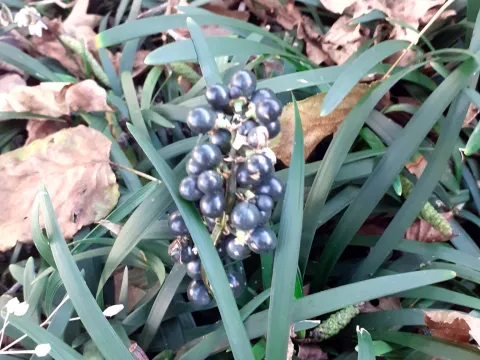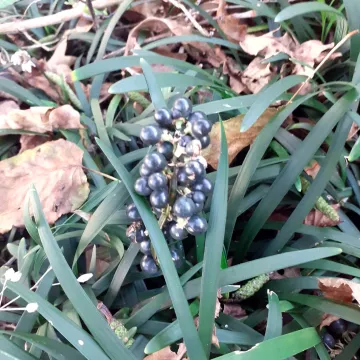
Liriope exiliflora
Liriope exiliflora (L. H. Bailey) H. H. Hume
Description
Liriope exiliflora is a robust herbaceous perennial belonging to the Asparagaceae family. Often referred to as a type of lilyturf, this plant is valued for its dense, grass-like foliage that remains green for the majority of the growing season, providing a clean and uniform ground cover that is highly resistant to foot traffic.
The native range of this species is found in East Asia, specifically within the diverse forests of China and surrounding regions. It has been introduced to various parts of the world as a staple of ornamental gardening, favored for its ability to thrive in environments where traditional turf grasses struggle, particularly in shaded woodland-style landscapes.
Botanically, the plant is characterized by its rhizomatous root system, which allows it to form dense clumps over time. Its narrow leaves are arching and dark green. During late summer and autumn, it produces vertical racemes of small, violet-hued flowers, followed by black berries, which add significant aesthetic value during the transition to the dormant season.
Cultivation requirements involve fertile, well-draining soil with consistent moisture. While it is notably shade-tolerant, it can adapt to areas with varying light conditions. Routine agronomic practices include applying organic mulch to protect the roots from extreme temperatures and performing light pruning in early spring to remove withered foliage and encourage vigorous new growth.
In landscape use, it is a versatile choice for borders, erosion control on gentle slopes, and as a filler for shade gardens. While generally resistant to major pests and diseases, the plant may occasionally face challenges from slugs or snails during wet spells, and root rot may develop if drainage is insufficient. Proper site selection and water management are critical for long-term health.
Photo gallery