
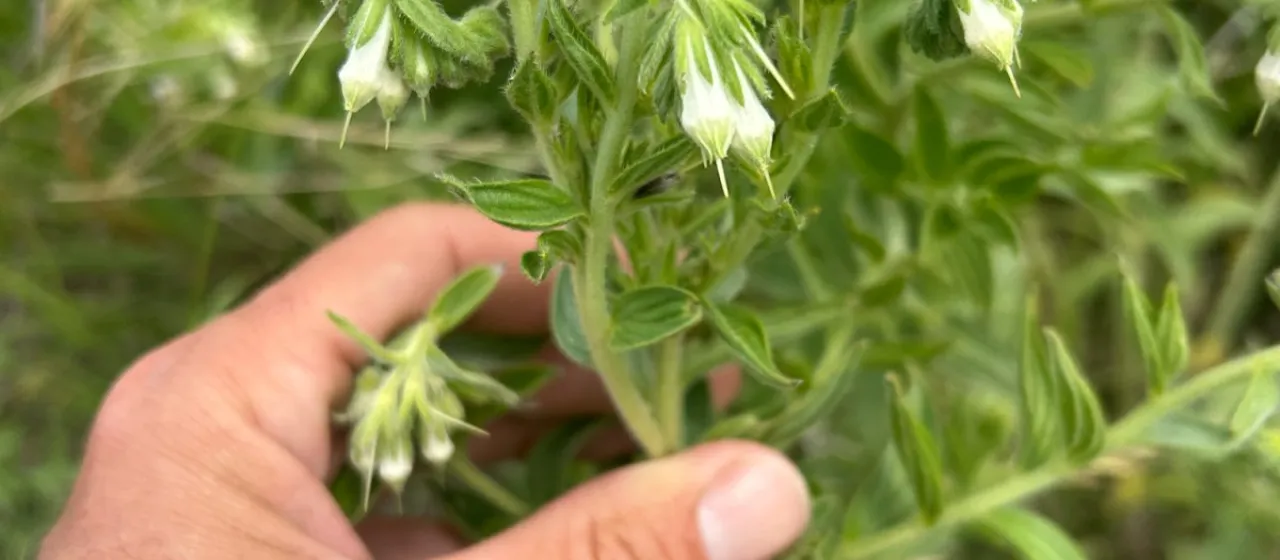
Description
Western gromwell (Lithospermum occidentale) is a perennial herbaceous crop belonging to the Boraginaceae family. Within the agricultural sector, it is recognized for its specialized role as a source of phytochemicals used in natural pigment production and pharmaceutical applications.
The plant is native to the regions of North America, typically thriving in open grassland environments and dry rocky slopes. Currently, its cultivation is focused on regions with a continental climate where the plant can establish deep root systems before the onset of extreme weather conditions.
The botanical structure of the plant features stiff, hairy stems and narrow leaves, which are typical adaptations for moisture retention. Its inflorescences are characterized by clusters of small, tubular flowers that bloom over several weeks, attracting various pollinators throughout the growth cycle.
Successful cultivation requires well-drained, lime-rich soils with a neutral or alkaline reaction. The plant is exceptionally drought-tolerant once established, but it requires adequate moisture during the germination stage to ensure uniform stand density and root development.
Primary agricultural utilization includes the harvesting of roots and seeds, which are processed to extract natural dyes and bioactive compounds. Beyond its industrial utility, the plant is sometimes used in conservation efforts to restore native meadow landscapes due to its ecological hardiness.
- Excellent tolerance to direct solar radiation.
- Low requirement for commercial fertilization.
- Sensitivity to root rot in waterlogged conditions.