
Description
Western stoneseed (Lithospermum ruderale) is a perennial herbaceous plant belonging to the Boraginaceae family. While not a commercial crop in the industrial sense, it holds significant interest for botanists and ethnobotanists. Native to Western North America, this plant is well-adapted to harsh environments, often thriving on rocky slopes, dry hillsides, and open plains where other species struggle to establish themselves.
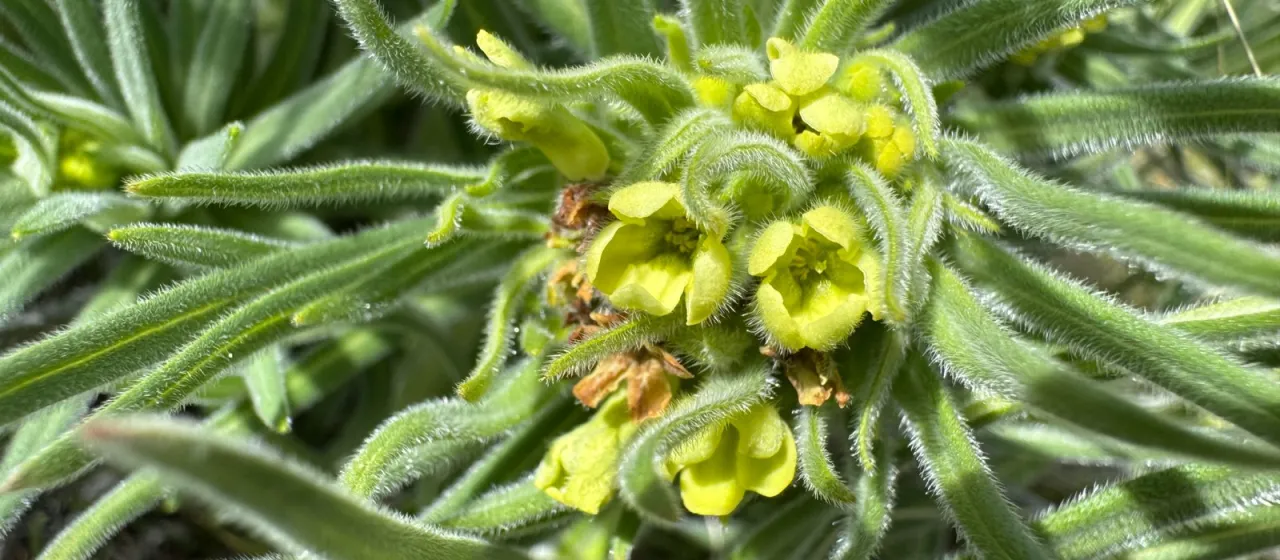
The plant exhibits a distinct botanical structure, characterized by multiple stems emerging from a deep, woody taproot. Its leaves are narrow, lance-shaped, and covered with coarse hairs, which serve as an adaptation to reduce water loss. The flowers are typically creamy-yellow, arranged in dense, leafy inflorescences. This architectural design allows the plant to efficiently manage photosynthesis in semi-arid climates.
In terms of growth requirements, Lithospermum ruderale favors well-drained, nutrient-poor, and slightly alkaline soils. It is highly drought-tolerant, relying on its extensive root system to access deep water tables. Proper site selection is crucial; the plant will not survive in heavy, waterlogged clay soils, which promote root rot. No intensive fertilization is necessary, as the plant has evolved to survive in low-fertility landscapes.
The historical and modern use of Western stoneseed is primarily medicinal. Indigenous populations utilized the roots and seeds for various therapeutic purposes, including contraception and digestive aids. In modern agricultural contexts, it is often viewed as a rangeland weed. Management strategies focus on preventing its overgrowth in areas designated for high-yield forage production, as it can compete with desirable grasses for limited soil moisture.
Common issues facing Western stoneseed include:
- Powdery mildew infections during humid spring seasons.
- Infestations by seed-feeding weevils.
- Root damage from excessive soil moisture levels.
- Intense competition from invasive grassland species.