
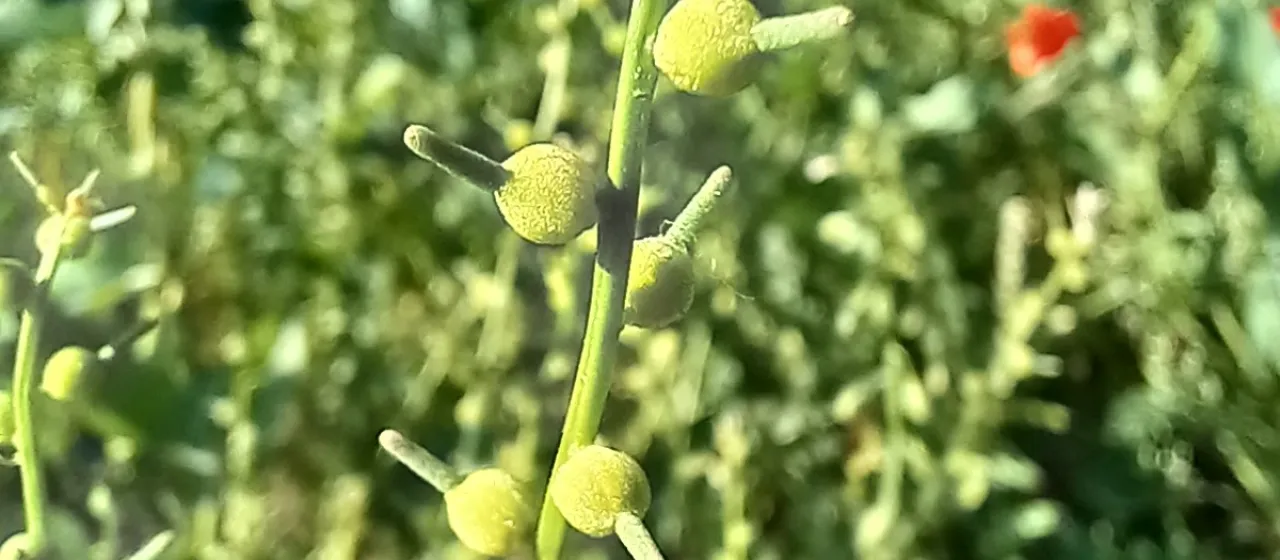
Description
Litwinowia tenuissima is an annual herbaceous plant belonging to the Brassicaceae family. Within agronomy, it is recognized for its remarkable hardiness and specialized adaptation to arid environments, making it a subject of interest for sustainable agriculture in dry climates.
The plant originates from the arid regions of Central Asia. Its natural habitat is characterized by sandy soils and significant moisture deficits, which has shaped its physiological evolution, enabling it to thrive in nutrient-poor environments where other crops would fail to establish.
Botanically, it features delicate stems and finely divided leaves, characteristic of its family. The fruit is a silique, containing seeds with a high oil content. This specific trait suggests potential for future exploitation as a source of industrial-grade oils in regions where water resources are severely limited.
Cultivation requirements for Litwinowia tenuissima are relatively low. The plant performs best in well-drained, light-textured soils. Agronomic practices focus on early spring sowing to leverage residual soil moisture, ensuring that the plant completes its life cycle before the onset of the most intense summer heat.
The primary economic use of the crop lies in its potential for oil extraction and as a hardy forage plant in desert-fringe agriculture. While it is susceptible to standard Brassicaceae-related pests, its rapid growth cycle acts as a natural defense, allowing the crop to achieve maturity before pest populations reach peak damage levels.