
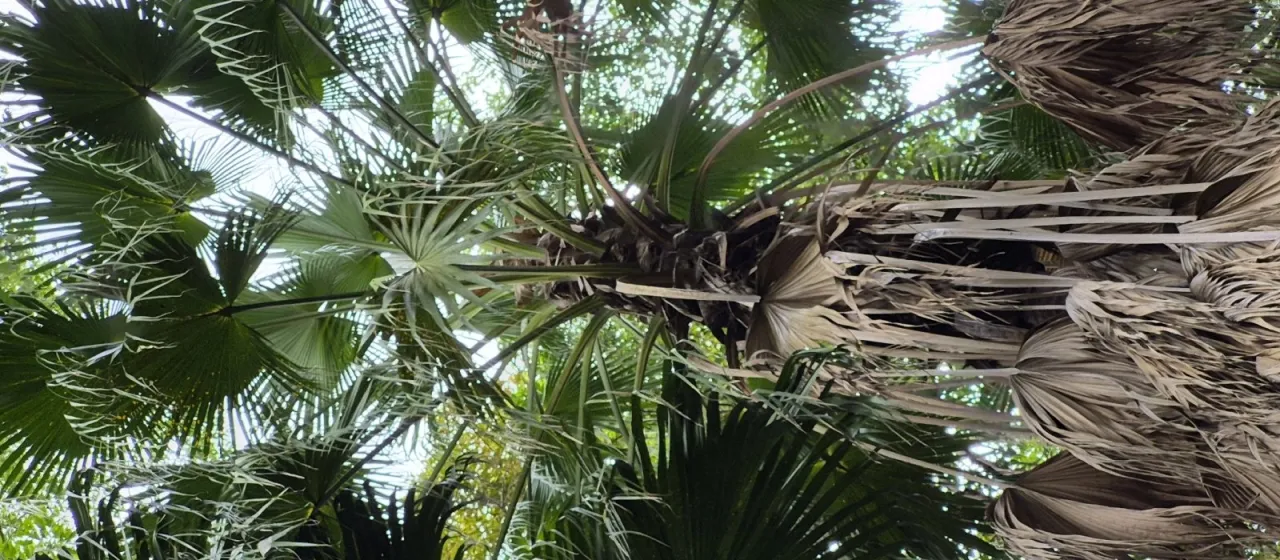
Description
The Chinese fan palm (Latin: Livistona chinensis) is a popular ornamental palm species belonging to the Arecaceae family. It is widely recognized for its dramatic, large, fan-shaped leaves that feature distinct drooping tips, providing an elegant and tropical look to both interior spaces and landscape designs in warmer climates.
Originating from the subtropical regions of East Asia, specifically Southern China, Japan, and the Ryukyu Islands, this palm thrives in humid, shaded forest environments. Its natural habitat dictates the requirements for successful cultivation, favoring stable temperatures and protection from harsh, direct sunlight that can scorch its delicate foliage.
Botanically, the species is characterized by a slow growth rate and a sturdy, single trunk. The leaves are deeply divided into segments, creating a beautiful circular fan. As the plant matures, it requires significant space to accommodate its wide canopy, making it a centerpiece in large greenhouses, lobbies, or spacious residential rooms.
Agricultural and horticultural requirements focus on maintaining a balanced environment. The palm prefers well-draining, nutrient-rich soil with a slightly acidic pH. Consistent irrigation is necessary to keep the soil evenly moist, but not waterlogged, as poor drainage is the primary cause of root degradation and fungal infections.
- Light: Bright, indirect sunlight is optimal.
- Temperature: Prefers 18°C to 25°C throughout the year.
- Watering: Keep soil moist, reduce watering in winter.
- Humidity: Requires high humidity; regular misting is beneficial.
- Fertilization: Apply balanced palm-specific fertilizer during the growing season.
Management of pests and diseases is essential for plant health. Common threats include spider mites and scale insects, which typically target palms kept in low-humidity environments. Fungal leaf spots may occur if air circulation is poor or if the foliage remains wet for extended periods. The Chinese fan palm is valued almost exclusively for its ornamental use, serving as a classic staple in botanical interiors.